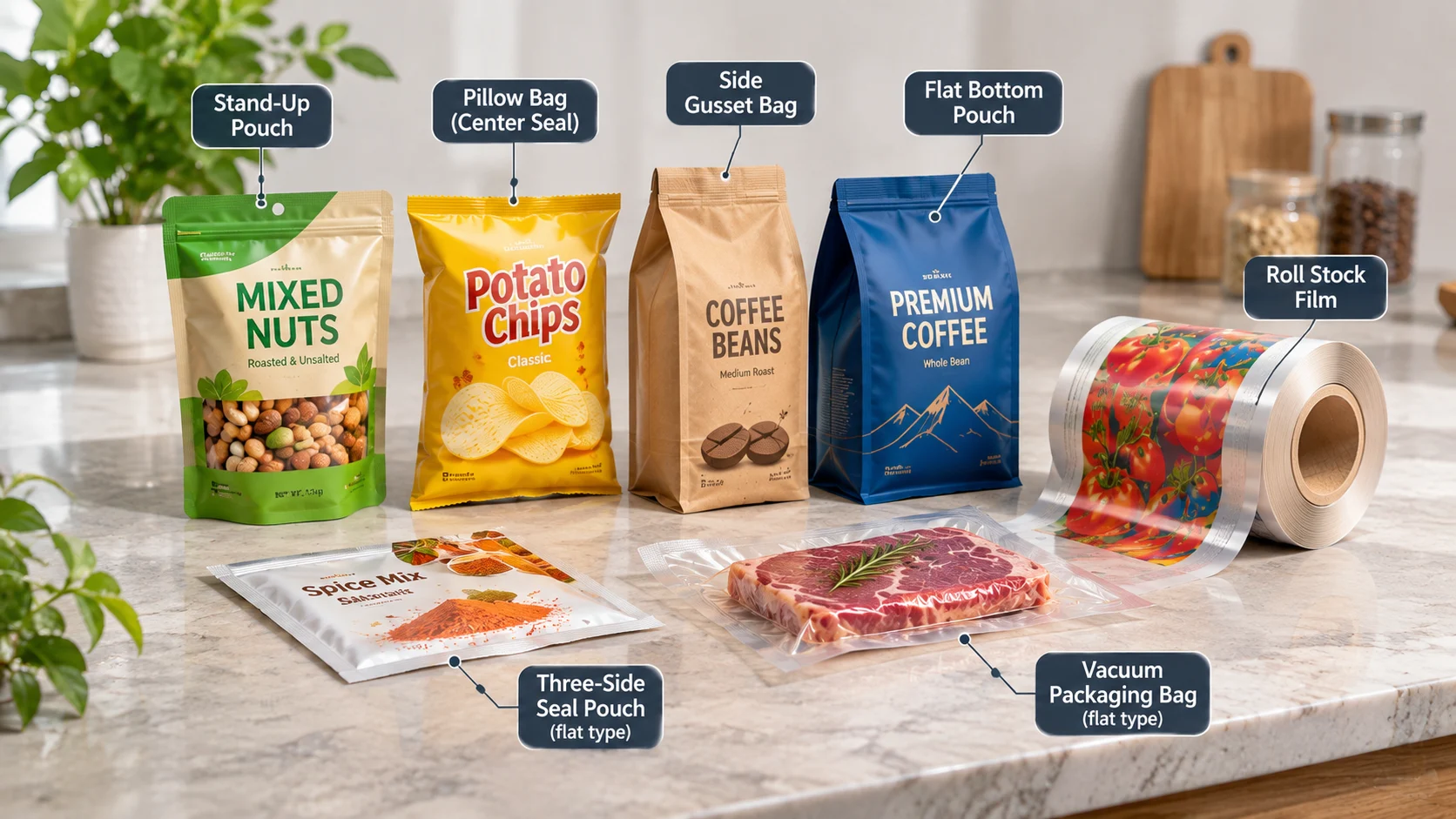
Choosing between the different types of plastic bags for food packaging involves more than selecting an attractive design. The packaging format affects filling efficiency, shelf presentation, sealing, transportation and how consumers use the product.
For example, a snack manufacturer operating a vertical form-fill-seal machine may prefer pillow bags made from roll stock film. A premium nut brand may choose resealable stand-up pouches for retail display. A meat processor may need vacuum packaging designed around its product and sealing equipment.
This guide compares seven common packaging formats, explains their structural differences and provides practical buying advice for food brands and packaging purchasers.
Important: Bag shape and material performance are separate decisions. The same pouch style can use different film structures. For PET, PE, PP and laminate comparisons, see our plastic packaging materials guide.
1. Types of Plastic Bags for Food Packaging: Comparison Table
The following table provides a quick overview of common flexible packaging formats, their applications, standing capability, closure options and filling methods.
| Packaging Format | Typical Foods | Self-Standing | Common Closure | Filling Method |
|---|---|---|---|---|
| Stand-Up Pouch | Nuts, dried fruit, snacks, powders | Usually, when filled appropriately | Heat seal, optional zipper | Premade pouch filling |
| Three-Side Seal Pouch | Seasonings, snacks, portion packs | No, in standard flat form | Heat seal, optional zipper | Premade pouch filling or compatible machinery |
| Center Seal / Pillow Bag | Chips, candy, bakery products | Generally no | Longitudinal and end seals | VFFS or HFFS |
| Side Gusset Bag | Coffee, grains, dry foods | Depends on design and filling | Heat seal, optional reclosure | Manual or automated filling |
| Flat Bottom Pouch | Coffee, premium snacks, powders | Usually, when filled appropriately | Heat seal, optional zipper | Premade pouch filling |
| Vacuum Packaging Bag | Meat, seafood, cheese | Generally no for flat vacuum bags | Vacuum process and heat seal | Vacuum chamber or compatible equipment |
| Roll Stock Film | Snacks, powders, selected liquids | Depends on finished package | Machine-formed seals | VFFS, HFFS or other compatible systems |
Note: Roll stock film is a material supply format rather than a finished bag type. Vacuum packaging describes a packaging process rather than one universal bag shape. Actual equipment compatibility depends on the final specifications.
2. Stand-Up Pouches
Stand-up pouches feature an expandable bottom gusset that allows the package to stand upright when appropriately filled. They are widely used for nuts, dried fruit, confectionery, powders and many other food products.
These bags offer a relatively large printable front panel and can include resealable zippers, tear notches, transparent windows and other customization options.
Advantages
- Good shelf presentation and product visibility.
- Optional zipper for repeated opening and closing.
- Flexible size, material and printing options.
- Suitable for many retail and e-commerce food products.
Purchasing Considerations
Buyers should confirm the bottom gusset design, filling opening, seal width and compatibility with premade pouch filling equipment. A zipper provides reclosure but does not automatically replace the initial heat seal required for product protection.
For custom sizes, printing and zipper options, see our custom stand-up pouches.
3. Three-Side Seal Pouches
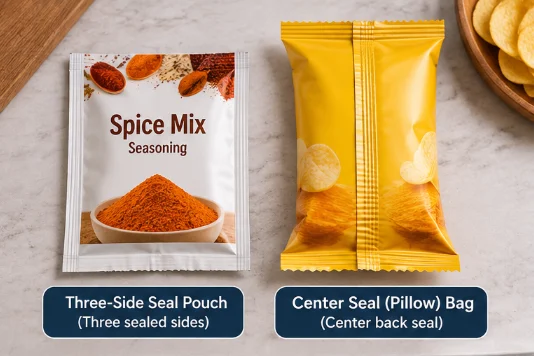
Three-side seal pouches are flat bags formed with three sealed edges before filling. The remaining opening is sealed after the product is inserted.
This structure is commonly used for seasonings, powdered products, snack portions, dried foods and other applications requiring a compact packaging format.
Although frequently associated with small sachets, three-side seal bags can also be manufactured in larger sizes, depending on product and equipment requirements.
Advantages
- Simple and space-efficient flat structure.
- Suitable for different portion sizes.
- Customizable film structures and printing.
- Optional tear notches and resealable closures for suitable designs.
Purchasing Considerations
Standard flat three-side seal bags do not stand independently. Buyers should also consider the filling opening, sealing area and the risk of powder or oil contaminating the final seal.
Explore our three-side seal food packaging bags for different product sizes and sealing requirements.
4. Center Seal and Pillow Bags
Center seal bags, often called pillow bags, are commonly produced from continuous roll stock film using compatible packaging machines.
A longitudinal seal forms the film into a tube, while transverse seals close the ends. Depending on the equipment and film structure, the longitudinal seal may use a fin seal or lap seal.
This packaging format is common for chips, candy, bakery snacks, confectionery and other products packed on automated production lines.
Advantages
- Suitable for automated form-fill-seal production.
- Efficient for many high-volume packaging operations.
- Compatible with different film and printing specifications.
Purchasing Considerations
A center seal bag is structurally different from a three-side seal pouch. The back seal, film width, package length and machine settings must be considered when preparing artwork and packaging specifications.
For automated packaging, buyers should confirm the machine type, sealing method and film travel direction before ordering printed roll stock.
See our center seal pouches for additional structure and customization options.
5. Side Gusset Bags vs. Flat Bottom Pouches
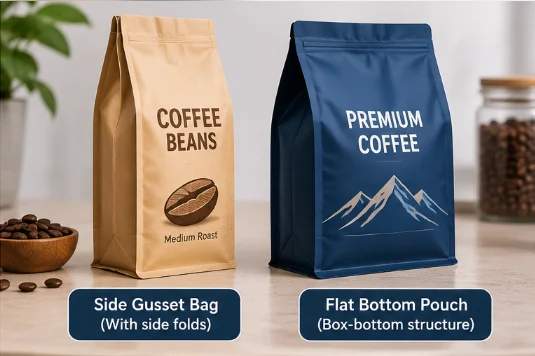
Side gusset bags and flat bottom pouches are sometimes confused because both may feature expandable side panels. However, their bottom structures are different.
Side Gusset Bags
Side gusset bags have folded panels along both sides that expand when filled. They are commonly used for coffee, grains and other dry food products.
Some side gusset bags can stand depending on their construction and contents, but they do not automatically have a separately constructed flat, box-style bottom.
Explore our side gusset bags for coffee and other suitable dry food applications.
Flat Bottom Pouches
Flat bottom pouches, also known as box pouches, have a defined flat base and side panels. The structure provides multiple printable surfaces and stable shelf presentation when properly filled.
They are often considered for premium coffee, snacks, powdered foods and other products where shelf appearance and usable volume are important.
See our custom flat bottom pouches for more information about box-bottom structures and printing options.
Key Differences
| Feature | Side Gusset Bag | Flat Bottom Pouch |
|---|---|---|
| Side panels | Expandable folded sides | Defined side gussets |
| Bottom structure | No separately constructed box-style base | Defined flat base |
| Shelf stability | Depends on construction and filling | Generally designed for stable display |
| Printing surfaces | Front, back and side areas | Front, back, side and bottom panels |
| Production complexity | Depends on design | Often more complex |
Buying tip: Request a filled sample or a photograph showing the bottom and side structure. A front-facing product image alone may not clearly identify the bag type.
6. Vacuum Packaging Bags
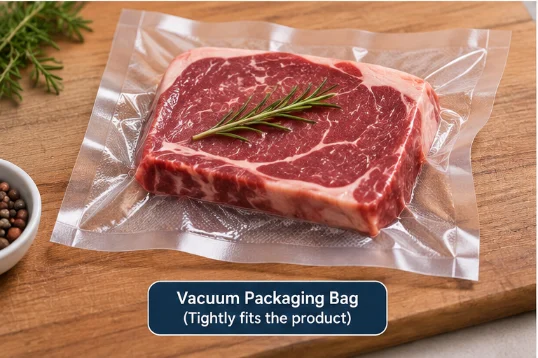
Vacuum packaging removes air from a package before sealing. It is used for selected meat, seafood, cheese and other food products where the packaging process supports the intended storage requirements.
Common material considerations include oxygen barrier, puncture resistance, flexibility and reliable heat sealing. PA/PE and other multilayer structures may be suitable depending on the application.
Purchasing Considerations
- Confirm compatibility with the vacuum packaging machine.
- Evaluate puncture resistance for products with sharp edges or bones.
- Check sealing performance under the intended operating conditions.
- Confirm the required storage temperature and product safety controls.
Important: Vacuum packaging does not automatically make food shelf-stable or safe at room temperature. Product formulation, hygiene, storage temperature and applicable food safety requirements remain essential.
Explore our vacuum packaging bags for custom material and sealing options.
7. Roll Stock Film for Automatic Food Packaging
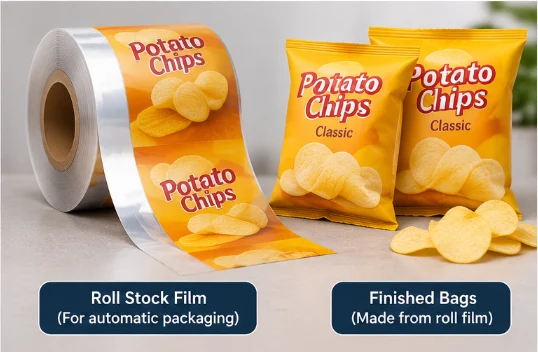
Roll stock film differs from premade bags because it is supplied as continuous flexible film. Compatible packaging equipment forms, fills and seals the finished package during production.
It is widely used for snacks, powders, confectionery and selected liquid products on suitable automated packaging lines.
Important Specifications
- Film width and roll dimensions.
- Unwind direction and printing orientation.
- Printing repeat length and registration mark spacing.
- Film structure and sealant layer.
- Sealing temperature, pressure and dwell-time requirements.
- Friction properties and machine compatibility.
Registration mark spacing is the distance between corresponding printed marks along the machine direction. In a common one-package-per-repeat layout, this may correspond to the package pitch. Special multi-package layouts must be checked against the actual machine and artwork.
Unlike premade bags, roll stock film requires careful coordination between the packaging manufacturer and the filling equipment supplier.
For more information, see our food packaging roll film for automatic packaging machines.
8. How to Choose the Right Food Packaging Bag
The best packaging format depends on the food product, filling process, required protection and commercial requirements. The following five steps can help buyers narrow their options.
Step 1: Understand Your Food Product
Consider moisture sensitivity, oxygen sensitivity, oil content, fragility, sharp edges and storage conditions. These factors affect material selection, seal design and handling requirements.
Step 2: Confirm Filling Weight and Dimensions
Packaging dimensions should not be selected from net weight alone. Product density, shape and filling behavior affect the required usable volume.
Powders, liquids and irregularly shaped products should be evaluated through trial filling, sample testing or equipment specifications.
Step 3: Match the Packaging Equipment
Determine whether the production line uses premade pouch filling, vertical form-fill-seal, horizontal form-fill-seal or vacuum packaging equipment.
Machine compatibility can be more important than visual preference when choosing the packaging format.
Step 4: Select Closure and Display Features
Consider whether the product requires a zipper, tear notch, transparent window, hang hole or self-standing structure. The opening and sealing design should match how consumers will use the product.
Step 5: Evaluate Total Packaging Cost
Compare more than the unit price of the bag. Consider filling efficiency, material consumption, transportation, printing requirements, tooling and expected order quantity.
A simpler bag format may reduce packaging costs, but only when it still meets the product’s protection and operational requirements.
9. Food Packaging Buying Checklist
Before requesting a custom packaging quotation, prepare the following information:
- Food type and product formulation.
- Net weight and approximate filling volume.
- Preferred bag style and dimensions.
- Storage conditions and target shelf life.
- Moisture, oxygen, puncture or leak-resistance requirements.
- Filling method or packaging machine model.
- Closure, window and printing preferences.
- Artwork and estimated order quantity.
- Destination market and required testing documentation.
Providing a reference bag or product sample can help the packaging manufacturer evaluate dimensions, material options and sealing requirements more accurately.
10. Frequently Asked Questions
Which plastic bag type is best for dry snacks?
Stand-up pouches, pillow bags and other formats may all be suitable. The right choice depends on filling equipment, shelf display, barrier requirements and whether consumers need a resealable closure.
Are flat bottom bags the same as side gusset bags?
No. Both may have expandable side panels, but flat bottom pouches have a defined flat base. Their construction, production process and shelf presentation differ.
Does thicker packaging film always provide better barrier protection?
No. Thickness can influence mechanical properties, but oxygen and moisture barrier performance depend on the complete material structure and testing conditions.
Should I choose premade bags or roll stock film?
The choice depends on your packaging equipment, production volume and filling requirements. Roll stock is designed for compatible form-fill-seal machinery, while premade pouches require suitable filling and sealing equipment.
Need Help Choosing a Food Packaging Format?
FDXPACK manufactures custom flexible packaging with digital and rotogravure printing options. We can review your product type, bag structure, dimensions, material requirements and filling process before discussing sampling and production.
Our advertised minimum order quantity starts from 500 pieces, subject to the packaging structure and production specifications.
Contact FDXPACK to request a custom food packaging quotation.
You can also explore our custom packaging products or review our plastic packaging materials guide for additional information.