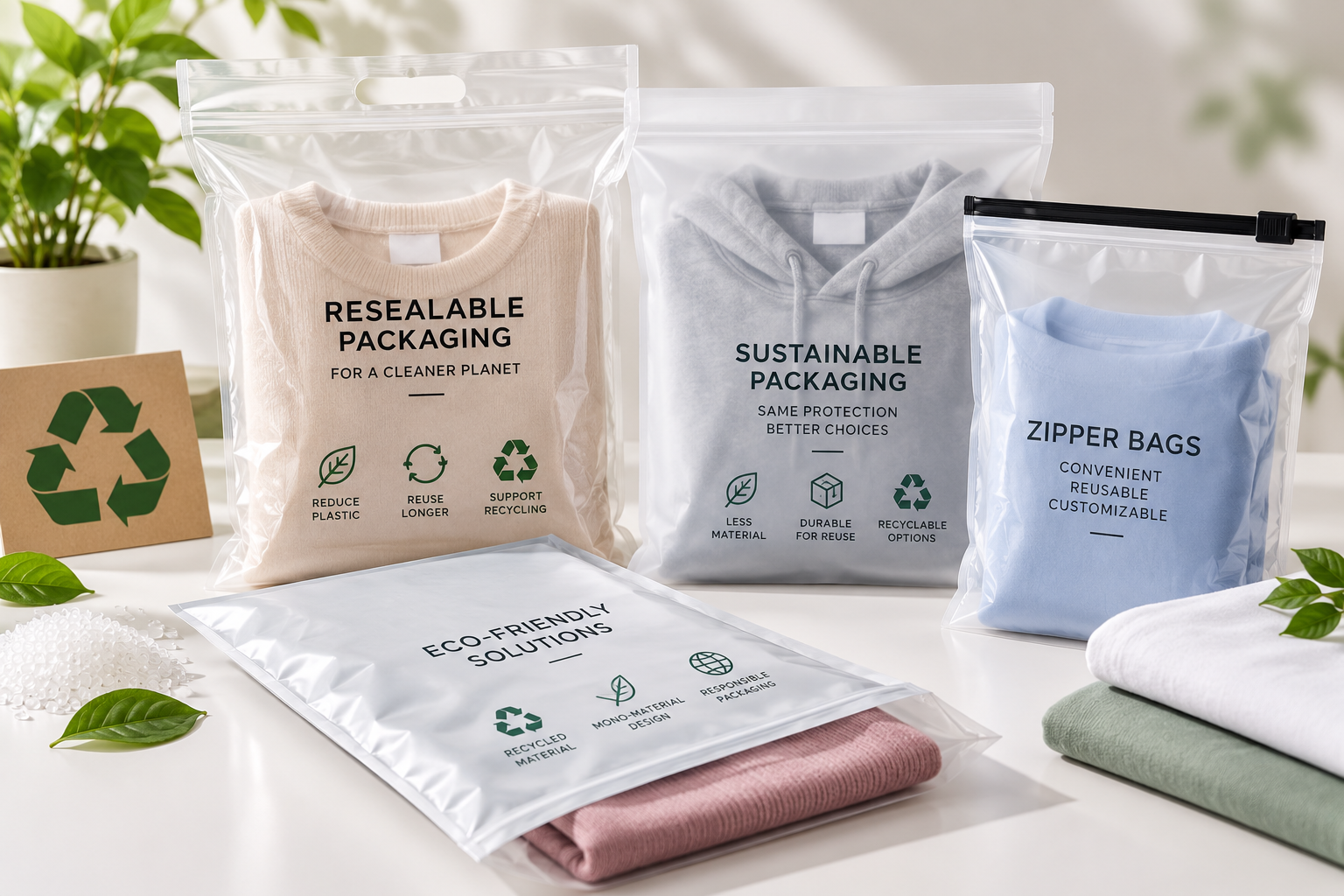
Resealable plastic bags are widely used for clothing, retail products, food, and e-commerce packaging. Their convenient closures allow products to be accessed multiple times without immediately replacing the packaging.
However, convenience alone does not make a zipper bag environmentally friendly.
For brands and packaging buyers, reducing waste starts with choosing suitable materials, optimizing bag dimensions, and considering how the packaging will be used and disposed of.
This guide explores practical ways to make better resealable packaging decisions.
1. Why Do Resealable Bags Create Packaging Waste?
Most conventional poly zipper bags are made from polyethylene (PE) or other plastic films. These materials provide flexibility, strength, and moisture resistance, but they can create environmental challenges when discarded after a single use.
Common concerns include:
- Material consumption: Oversized or unnecessarily thick bags use more plastic.
- Single-use disposal: Packaging may be discarded immediately after opening.
- Mixed materials: Different films, closures, labels, and coatings can complicate recycling.
- Limited collection: Flexible plastic bags are not accepted by every local recycling program.
A more sustainable packaging strategy should consider the complete product lifecycle, not just the material name.
2. Choosing Better Materials for Resealable Bags
Different materials offer different packaging properties and potential environmental advantages.
| Material Option | Main Advantage | Environmental Consideration |
|---|---|---|
| Virgin PE | Flexible, durable, and widely used | Fossil-based material; recycling depends on collection systems |
| Mono-PE Design | Potential compatibility with PE recycling streams | Zippers, inks, and additives must also be assessed |
| PCR PE | Can reduce demand for virgin plastic | Quality, availability, and intended-use restrictions must be checked |
| Frosted CPE | Soft matte appearance for apparel packaging | Recyclability depends on the actual formulation and structure |
| Compostable Materials | Designed for specific composting conditions | Require suitable certification and collection infrastructure |
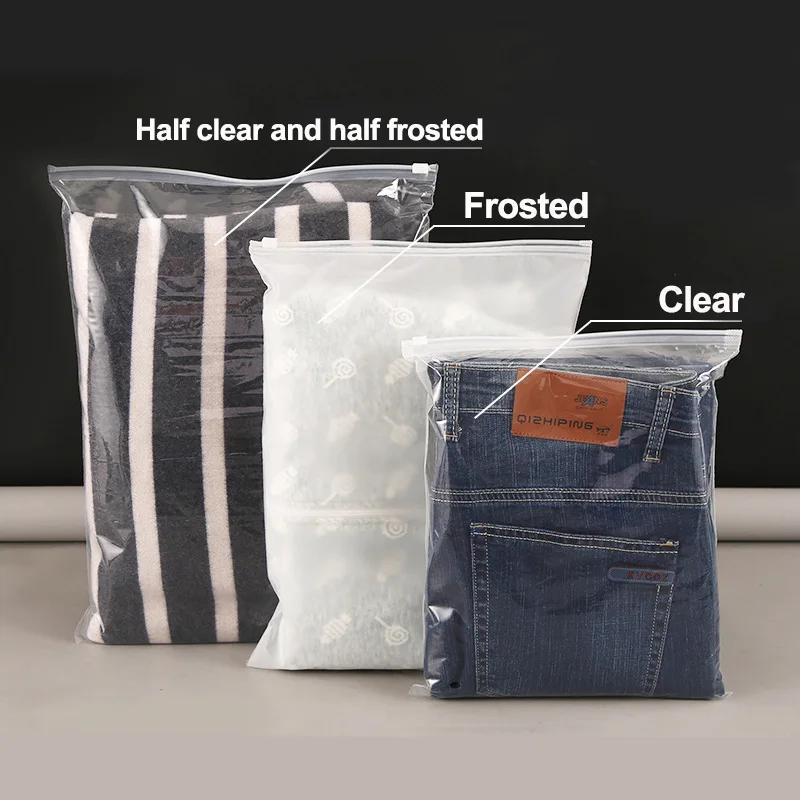
Important: Recyclable, recycled-content, and compostable packaging are different concepts. One claim does not automatically establish another.
3. Can Reusable Zipper Bags Help Reduce Waste?
Resealable closures can allow packaging to remain useful after the initial opening.
For example, clothing brands may use zipper bags that customers can keep for garment storage, while retail brands may choose closures that protect products between uses.
Common closure options include:
Press-to-Close Zippers
Simple interlocking zipper tracks suitable for apparel, accessories, and selected food packaging.
Slider Zippers
Convenient sliding closures often used for larger clothing bags, bedding, and textile packaging.
Resealable Adhesive Closures
Fold-over adhesive flaps that support repeated opening and closing when the adhesive is designed for reuse.
However, repeated opening does not guarantee that packaging will actually be reused. Environmental benefits depend on durability, user behavior, and the number of uses.
4. How Can Brands Reduce Plastic Use?
Packaging waste reduction does not always require changing to a completely different material.
Small design improvements can make a difference.
| Packaging Decision | Practical Recommendation |
|---|---|
| Bag Size | Avoid unnecessary empty space |
| Film Thickness | Use the minimum thickness that meets protection requirements |
| Closure Type | Select a closure based on actual opening frequency |
| Material Structure | Evaluate compatible mono-material options |
| Printing & Labels | Consider recycling compatibility when selecting inks and labels |
| Product Protection | Maintain adequate strength and protection to prevent damage |
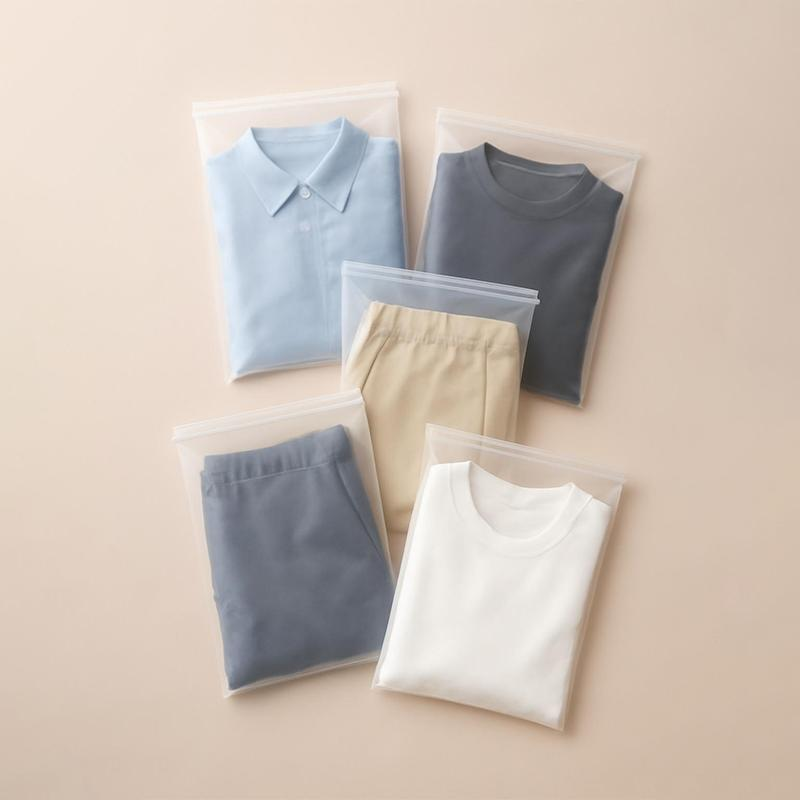
The goal is to balance material efficiency with reliable packaging performance.
5. Are Recyclable Zipper Bags Always the Best Choice?
Not necessarily.
A PE-based zipper bag may be designed for compatibility with a PE recycling stream, but actual recyclability depends on the complete packaging structure and available recycling infrastructure.
Packaging buyers should evaluate:
- Main film material and composition
- Zipper and slider material compatibility
- Printing inks, adhesives, and labels
- Local collection and sorting systems
- Applicable design-for-recycling guidance
For brands selling into the European market, the EU Packaging and Packaging Waste Regulation (PPWR) also makes packaging design, material minimization, and recyclability important considerations.
Mono-material packaging should not automatically be described as PPWR-compliant. Compliance depends on the finished packaging and applicable requirements.
6. A Practical Checklist for Packaging Buyers
Before ordering custom resealable bags, ask your supplier these questions:
| Buyer Question | Why It Matters |
|---|---|
| Can the bag size be optimized? | Helps avoid unnecessary material use |
| Which film thickness is suitable? | Balances strength and material consumption |
| Is a mono-material option available? | Supports evaluation of recycling compatibility |
| What material is used for the zipper? | Closure composition can affect recyclability |
| Can the bag be reused? | Depends on durability and closure performance |
| Are material specifications available? | Helps buyers evaluate environmental claims |
| Can samples be tested first? | Confirms suitability before bulk production |
A supplier should be able to discuss material options, packaging performance, and customization requirements without making unsupported environmental claims.
7. Frequently Asked Questions
Are resealable plastic bags recyclable?
Some can be designed for recycling compatibility, but acceptance depends on the full packaging structure and local recycling systems.
Are biodegradable zipper bags better for the environment?
Not automatically. Environmental outcomes depend on material composition, degradation conditions, collection infrastructure, and the intended application.
Can brands use thinner plastic bags to reduce waste?
Yes, where the thinner material still meets strength, sealing, and product-protection requirements.
Is a reusable zipper bag the same as recyclable packaging?
No. Reusability describes repeated use, while recyclability concerns whether the material can be collected and processed through an appropriate recycling system.
Conclusion
Reducing waste from resealable packaging requires more than choosing a material marketed as eco-friendly.
Brands should focus on appropriate bag dimensions, reliable closures, material efficiency, product protection, and realistic end-of-life options.
The best packaging solution balances functionality, cost, customer experience, and environmental considerations.
Explore Custom Resealable Packaging Solutions
FDXPACK manufactures custom resealable poly bags for apparel, retail, and e-commerce applications.
Choose from clear PE, frosted CPE, press-to-close zippers, slider closures, and selected resealable adhesive options.
Explore our Custom Resealable Poly Bags Manufacturer solutions to learn more about materials, customization, printing, and bulk production.