Choosing the right bread packaging is important for maintaining product texture, managing moisture and protecting bakery products during storage and transportation.
Some breads need airflow to maintain a crisp crust, while others require packaging that helps retain moisture and softness.
Two common options are micro-perforated bread bags and standard unperforated plastic bags. Understanding their differences helps bakeries select packaging that better matches their products.
1. What Are Micro-Perforated Bread Bags?

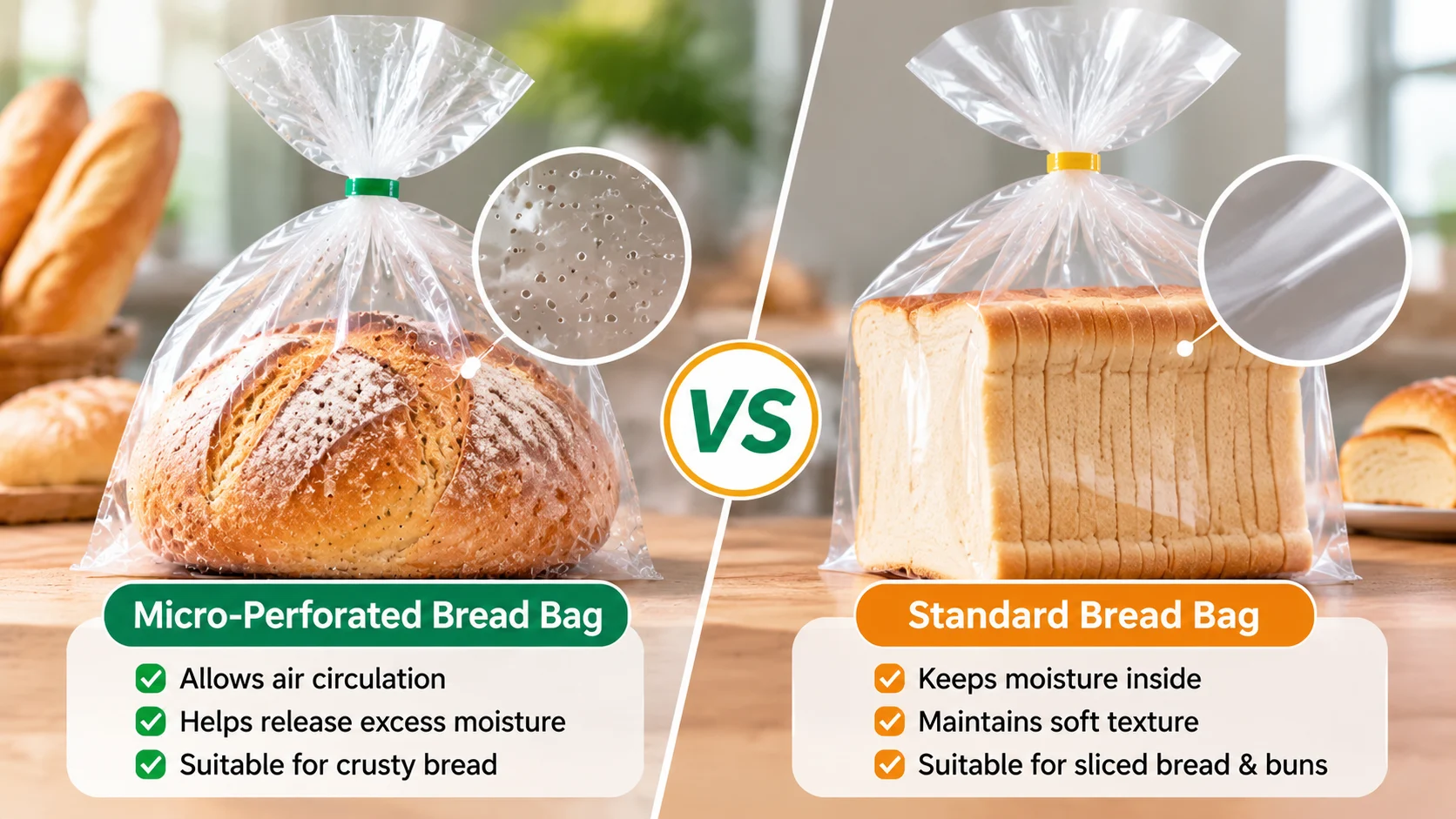
Micro-perforated bread bags are plastic packaging bags with small, evenly distributed holes throughout the film.
These tiny openings allow controlled airflow and help moisture escape from inside the package.
They are commonly considered for products that need to maintain a crisp exterior.
Key Benefits:
- Allow excess moisture to escape.
- Help reduce moisture accumulation inside the bag.
- Support crisp crust texture.
- Available in transparent and custom printed options.
Typical Applications:
- Artisan bread
- Baguettes
- Sourdough bread
- Crusty bread rolls
Micro-perforation does not guarantee longer shelf life. Its suitability depends on the bread type, moisture content and storage conditions.
2. What Are Standard Bread Bags?
Standard bread bags have an unperforated film structure that restricts airflow through the packaging.
They help retain moisture and are commonly used for bread products where a soft texture is preferred.
Key Benefits:
- Help reduce moisture loss.
- Maintain a soft bread texture.
- Protect products from external contamination.
- Suitable for custom printing and different bag sizes.
Typical Applications:
- Sliced sandwich bread
- Toast
- Milk bread
- Hamburger buns
- Soft dinner rolls
Standard bags are generally more suitable for fully cooled bread. Packaging warm bread in an unperforated bag may cause condensation and negatively affect product quality.
3. Micro-Perforated vs. Standard Bread Bags: Key Differences
| Comparison | Micro-Perforated Bags | Standard Bread Bags |
|---|---|---|
| Film Structure | Small ventilation holes | Unperforated film |
| Airflow | Allows controlled airflow | Restricts airflow |
| Moisture Management | Allows moisture to escape | Helps retain moisture |
| Crust Texture | Helps maintain crispness | May soften crispy crust |
| Softness Retention | May accelerate moisture loss | Helps maintain softness |
| Typical Applications | Baguettes, sourdough | Toast, sliced bread, buns |
| Custom Printing | Available | Available |
Neither option is universally better. The correct choice depends on the desired bread texture and packaging conditions.
4. How Does Moisture Affect Packaged Bread?
Moisture management is one of the most important factors in bread packaging.
Freshly baked bread contains moisture that gradually moves between the crumb and crust during cooling and storage.
When moisture becomes trapped inside an unperforated package, a crispy crust may become soft or leathery.
On the other hand, excessive moisture loss can make bread dry and stale.
| Moisture Condition | Possible Result | Packaging Consideration |
|---|---|---|
| Excess Moisture Inside Bag | Condensation and softer crust | Consider ventilation where suitable |
| Excessive Moisture Loss | Dry and hard bread | Consider unperforated film |
| Unstable Storage Conditions | Changes in texture and quality | Evaluate storage and packaging together |
| Poor Package Integrity | Uncontrolled moisture exchange | Check sealing performance |
The goal is to balance moisture retention and moisture release according to the specific bread product.
5. Which Bread Products Need Perforated Packaging?
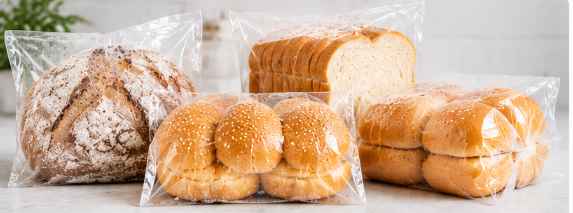
Different bakery products have different texture and moisture requirements.
Artisan Bread and Baguettes
These products often require a crisp exterior. Micro-perforated packaging can help release excess moisture and maintain crust texture.
Sourdough Bread
Sourdough with a crispy crust may benefit from controlled ventilation, depending on its cooling and storage conditions.
Sliced Sandwich Bread
Soft sliced bread generally benefits from unperforated packaging that helps retain moisture and softness.
Hamburger Buns and Milk Bread
These products typically require packaging that limits moisture loss and protects their soft texture.
Bread Rolls
The appropriate packaging depends on whether the product is intended to remain crusty or soft.For customized bread packaging solutions, explore our Custom Bread Packaging Bags to compare suitable bag styles, materials and ventilation options.
6. How to Choose the Right Bread Packaging Film
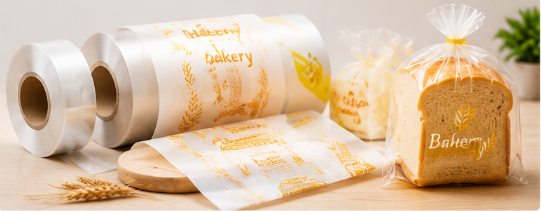
Besides perforation, material selection also influences packaging performance.
| Material | Main Characteristics | Typical Consideration |
|---|---|---|
| PE Film | Flexible and heat-sealable options | Soft bread packaging |
| PP Film | Clarity and stiffness options | Bakery retail packaging |
| BOPP Film | Good clarity and printability | Printed bread bags |
| CPP Film | Flexible heat-sealing properties | Selected bakery packaging |
| Laminated Films | Customizable barrier properties | Specialty bakery applications |
When selecting packaging materials, consider:
- Required moisture retention or release.
- Film thickness and mechanical strength.
- Heat-sealing requirements.
- Product visibility and printing.
- Packaging machine compatibility.
- Intended storage and distribution conditions.
Perforation size, density and distribution should also be evaluated through packaging trials.
For automated bakery production, explore our Custom Food Packaging Roll Film solutions for custom printing, film specifications and machine compatibility.
7. Bread Packaging Buyer Checklist
Before ordering custom bread bags, buyers should confirm the following:
| Requirement | What to Check |
|---|---|
| Bread Type | Crispy crust or soft texture |
| Bag Structure | Perforated or unperforated |
| Material | PE, PP or selected laminated films |
| Bag Dimensions | Width, height and gusset |
| Film Thickness | Suitable for product weight and handling |
| Printing | Brand logo, product information and graphics |
| Production | Manual packing or automatic packaging |
| Quantity | MOQ and estimated production volume |
Testing the selected packaging with the actual bread product is important before starting mass production.
Frequently Asked Questions
Are micro-perforated bread bags better than standard bags?
They are better suited to products that need moisture release and a crisp crust. Standard bags are generally more suitable for soft bread that needs moisture retention.
Can micro-perforated bags prevent bread from becoming moldy?
No. Micro-perforation is not a guaranteed mold-prevention method. Mold development depends on moisture, water activity, temperature, hygiene and other factors.
Can micro-perforated bread bags be custom printed?
Yes. Selected PE and PP film structures can be designed with custom printing and different bag dimensions.
Can standard bread bags be used for hot bread?
Bread should generally be cooled appropriately before packaging. Trapped steam and condensation can affect texture and product quality.
Can bread packaging be supplied as roll film?
Yes. Custom printed roll film can be developed for compatible automatic packaging equipment, subject to machine specifications.
Conclusion
Micro-perforated and standard bread bags serve different packaging purposes.
Micro-perforated bags help release moisture and are often considered for crusty bread, while standard unperforated bags help retain moisture and are commonly used for soft bread products.
The best packaging choice depends on bread texture, cooling conditions, storage requirements and production processes.
Need Custom Bread Packaging Bags?
FDXPACK provides custom bread packaging bags and printed flexible packaging solutions, including material options, custom sizes and roll film.
Contact us for packaging specifications and quotations.
Website: FDXPACK
Email: emma@fdxpack.com
Contact: Contact Us