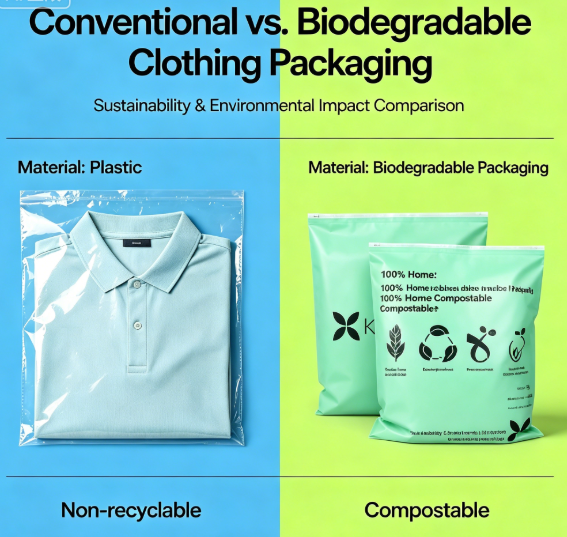
I’m Emma Xiao from FDXPACK.https://fdxpack.com/ With 17 years in the packaging industry, we serve global brands and buyers across North America, Europe and Asia from our China factory, supplying packaging for food, apparel and industrial products.
Today I’d like to focus on apparel packaging. It is no longer only for product protection; sustainability and brand image have become key priorities for fashion brands.
The industry has shifted from pure cost control to balancing traditional plastic packaging and eco-degradable alternatives. This nuanced choice affects brand positioning, supply chains and long-term profits.
We offer both conventional and eco-friendly packaging solutions, helping you pick the option that best fits your products, consumers and brand values.https://www.yoemma.com/
Understanding Traditional Plastic Apparel Packaging
Common Types & Materials
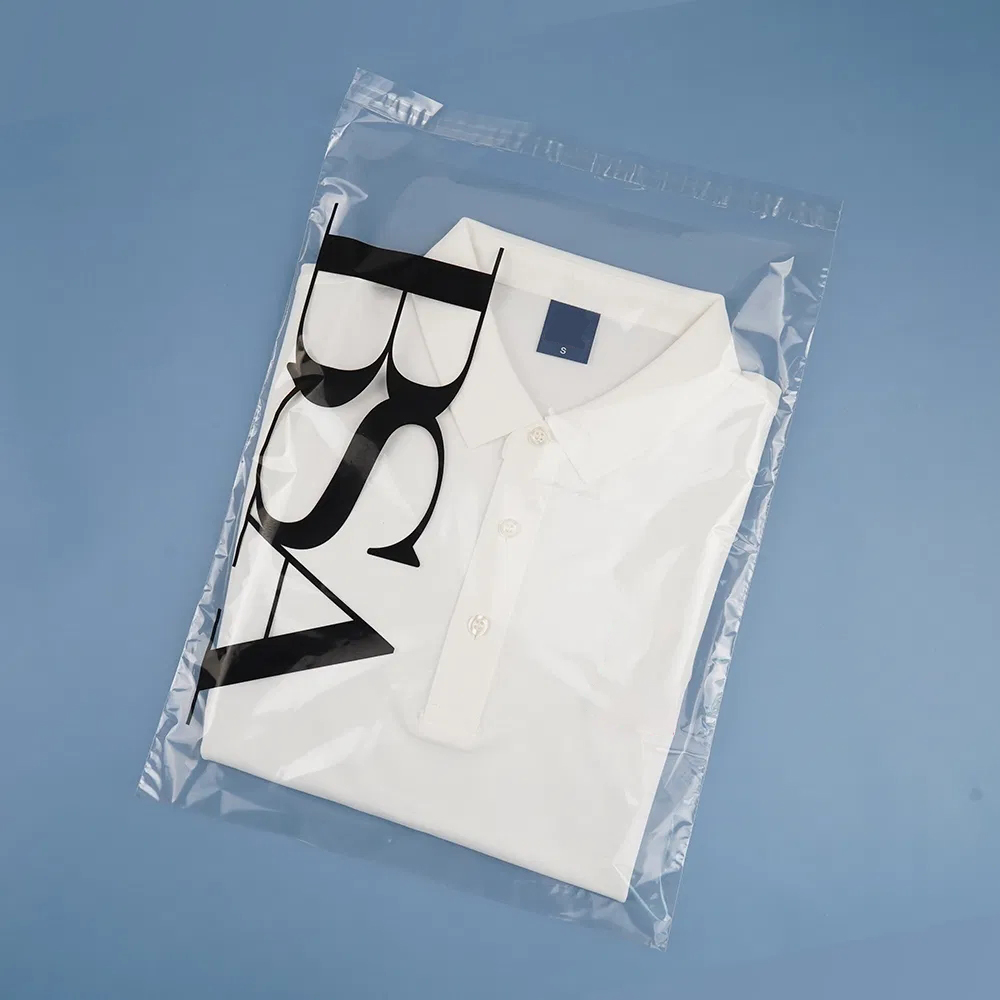
Traditional apparel plastic packaging mainly includes clear polybags, adhesive bags, zipper bags and courier bags, made of PE or PP materials. They have long been the mainstream choice for the fashion industry.
Core Practical Advantages
Plastic packaging is versatile, low-cost, and well protective. It effectively blocks dust and moisture, keeping garments intact during long-distance logistics, storage and delivery.
Protection Performance
Made of LDPE and similar materials, it features great waterproof, tear and puncture resistance. It protects clothes from humidity, mildew, dirt and snagging in complex supply chain links.
Cost & Market Value
Traditional plastic packaging is cheap for bulk orders, ideal for high-volume fast fashion and small brands with tight budgets. It balances reliable protection and cost control.
Objective Industry Position
Though it carries environmental drawbacks, traditional plastic packaging still stays mainstream due to its solid protection and economic benefits. Its existing market status cannot be simply replaced in the short term.
Exploring Eco-Degradable Apparel Packaging
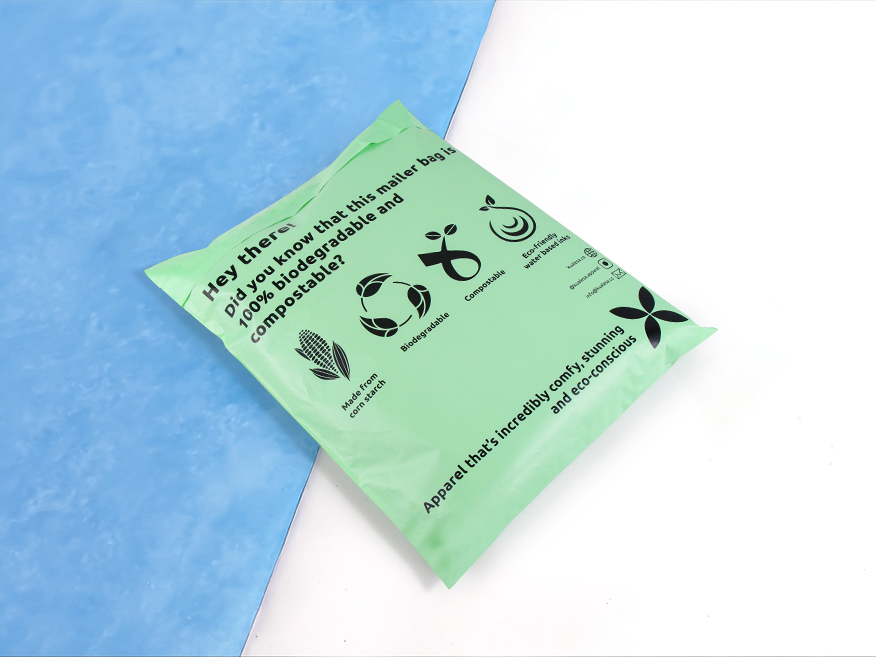
Now, let's turn our attention to the increasingly popular category of eco-degradable apparel packaging. This term encompasses a range of materials designed to break down more rapidly than traditional plastics, thereby reducing their long-term environmental impact. These can include compostable bags (which require specific industrial composting conditions), biodegradable bags (which break down over time in certain environments), or even bags made from recycled content. The primary appeal of eco-degradable options is their ability to enhance a brand's sustainability credentials and appeal to environmentally conscious consumers. Brands adopting these solutions are sending a clear message about their commitment to the planet.
Unpacking the "Eco-Degradable" Label – More Than Just a Buzzword
The term "eco-degradable" is often used broadly, but it's crucial for brands to understand the nuances behind this label. It’s not a one-size-fits-all solution, and misconceptions can lead to unintended environmental consequences or even greenwashing accusations. For instance, "biodegradable" simply means a material can be broken down by microorganisms, but it doesn't specify the time frame or the conditions required. Many so-called biodegradable plastics only degrade in specific industrial composting facilities, not in a typical landfill or natural environment. "Compostable" is a more stringent standard, implying that the material will break down into organic matter, carbon dioxide, and water within a specific timeframe in a composting environment, leaving no toxic residue. However, the availability of industrial composting facilities is not universal, meaning a "compostable" bag might still end up in a landfill if proper infrastructure isn't present in the consumer's area. I recall a client who was very excited about a "biodegradable" bag, only to realize later that its degradation process was so slow in a landfill that it offered little real environmental advantage over traditional plastic in their specific target market. This experience really highlighted the importance of asking detailed questions: "How does it degrade?", "Under what conditions?", and "What infrastructure is available for its disposal?" At FDXPACK, we prioritize transparency and education, ensuring our clients understand the full lifecycle of their eco-degradable packaging choices, helping them avoid missteps and truly align their packaging with their sustainability goals.
Making the Choice: Factors for Your Clothing Brand to Consider
Deciding between eco-degradable and traditional plastic isn't just a matter of price; it requires a holistic view of your brand, your product, and your market.
- Brand Values & Consumer Expectations: What message do you want to convey? If sustainability is a core pillar of your brand, investing in truly eco-friendly packaging can significantly enhance your image and resonate with your target audience.
- Budget: Eco-degradable options often come at a higher cost per unit due to specialized materials and production processes. You need to assess if your pricing strategy can absorb this or if your customers are willing to pay a premium.
- Product Protection Needs: Consider the journey your garments will undertake. For highly delicate items, or those with very long transit times, the robust protection of traditional plastic might still be indispensable. For local distribution or less delicate items, eco-degradable might suffice.
- Supply Chain & Logistics: The weight of packaging, its durability during shipping, and storage conditions all play a role. Some eco-degradable materials might have different shelf-life characteristics than traditional plastics.
- Disposal Infrastructure: This is crucial. If your target market lacks industrial composting facilities, a "compostable" bag might not offer its intended environmental benefit. Understanding local disposal options is key to making a truly responsible choice.
FDXPACK's Approach: Custom Solutions for Every Need
At FDXPACK, our 17 years of experience have shown us that there’s no single "best" packaging solution for every brand. That’s why we specialize in custom-tailored approaches. We offer a wide range of both traditional plastic clothing bags—such as durable zipper bags, self-adhesive bags, and courier bags—and various types of eco-degradable bags. Our focus is always on high quality, regardless of the material. We understand that your brand's reputation rests on the packaging as much as the product inside. We don't push for the lowest price; we push for the highest value and suitability for your specific requirements. My team and I are here to guide you through the complexities, ensuring your custom packaging not only looks fantastic but also performs perfectly and aligns with your business goals and values.

Conclusion
The debate between eco-degradable and traditional plastic packaging for apparel is complex, with valid arguments on both sides. There's no universal right or wrong answer, but rather a spectrum of choices that depend on your unique brand, budget, and sustainability objectives. The most important step is to make an informed decision, understanding the full implications of each option. At FDXPACK, we are committed to being your expert partner, providing high-quality, customized packaging solutions that meet your exact needs—whether that's robust traditional plastic or innovative eco-degradable options. As Emma Xiao, I personally invite you to connect with us. Let's discuss your clothing brand's specific requirements and find the perfect packaging solution to help you thrive.