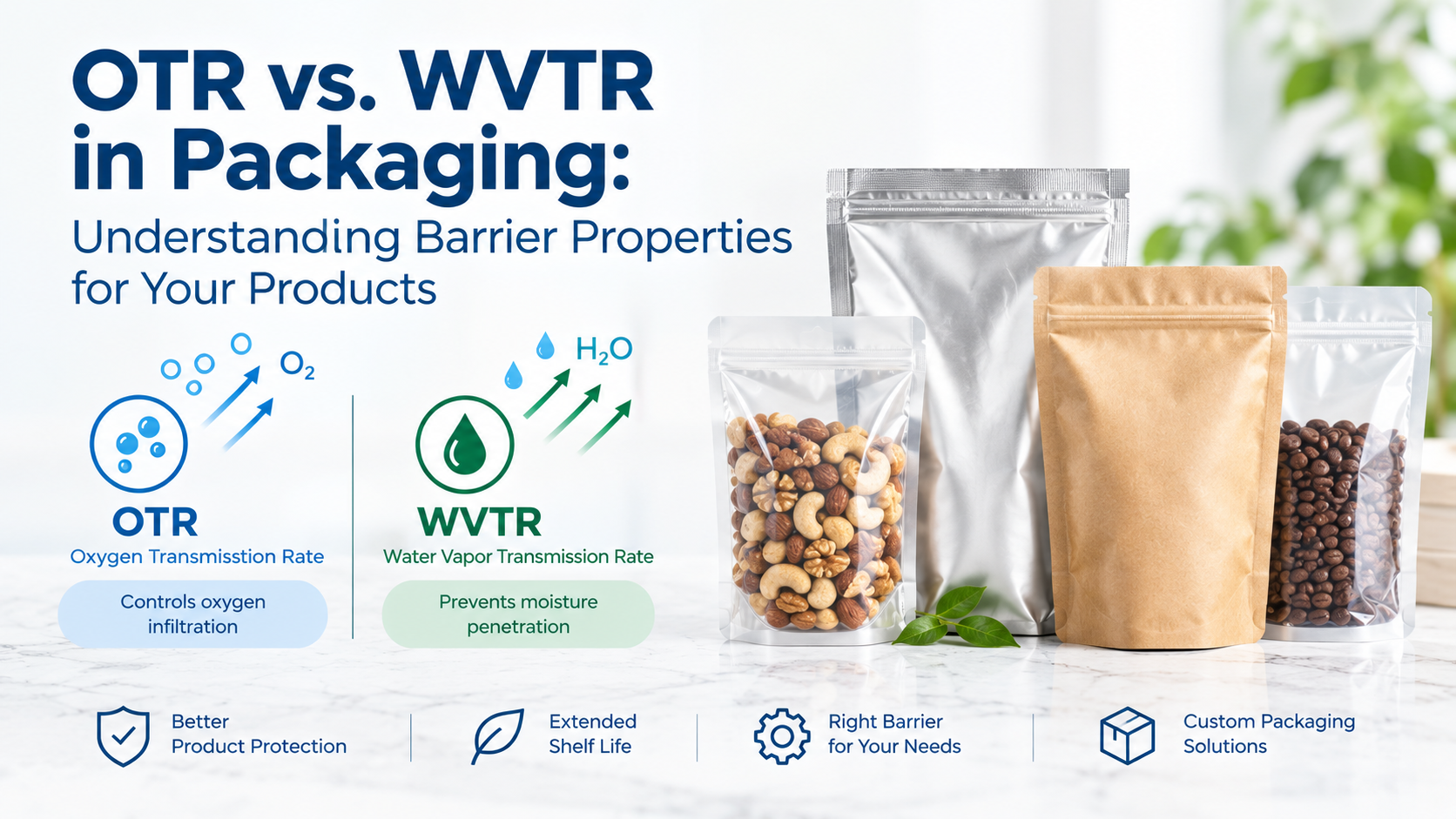
OTR and WVTR are two of the most critical barrier measurements in flexible packaging — yet they are often confused or overlooked.https://fdxpack.com/
Oxygen Transmission Rate (OTR) controls how much oxygen seeps in, while Water Vapor Transmission Rate (WVTR) governs moisture movement. Get either wrong, and even the best product can go stale, spoil, or lose its quality long before it reaches the consumer. Understanding both is essential for protecting product integrity and shelf life.
What is OTR (Oxygen Transmission Rate)?
OTR, or Oxygen Transmission Rate, measures how much oxygen can pass through a packaging material over a specific period. It's typically expressed in cubic centimeters per square meter per day (cc/m²/day) under specific temperature and humidity conditions. Oxygen is one of the primary factors that cause food spoilage, oxidation, and degradation of sensitive products like coffee, nuts, dried fruits, and pharmaceuticals. A lower OTR means better oxygen barrier properties, which helps preserve product freshness and extend shelf life. At FDXPACK, we carefully select materials with appropriate OTR values based on each client's product requirements and storage conditions.
Dive Deeper: Why OTR Matters for Your Product
Understanding OTR is critical for products that are sensitive to oxidation. When oxygen enters a package, it can cause rancidity in oils and fats, discoloration in dried foods, loss of flavor in coffee and tea, and reduced potency in vitamins and supplements. For example, roasted coffee beans release carbon dioxide while absorbing oxygen, which accelerates staling. By using packaging with a low OTR, we can significantly slow this process. At FDXPACK, we work with multilayer films that incorporate materials like aluminum foil, metallized films, or high-barrier polymers such as EVOH (Ethylene Vinyl Alcohol) to achieve OTR values as low as 0.1 cc/m²/day or even less. The choice of material depends on your product's sensitivity, desired shelf life, and budget. For instance, a premium organic snack brand might require ultra-low OTR packaging to maintain product quality for 12-18 months, while a short-shelf-life product might work with moderate barrier properties. We also consider the packaging format—stand-up pouches, flat bags, or quad-seal bags—as each design can affect the overall barrier performance. Our FDA and BRC certifications ensure that all materials meet food-grade safety standards while delivering the barrier protection your products need.
What is WVTR (Water Vapor Transmission Rate)?
WVTR, or Water Vapor Transmission Rate, measures how much water vapor can pass through a packaging material over time. It's typically expressed in grams per square meter per day (g/m²/day) under controlled temperature and humidity conditions. Moisture is another major factor in product degradation, causing issues like clumping in powders, mold growth in dry foods, loss of crispness in snacks, and chemical reactions in pharmaceuticals. A lower WVTR indicates better moisture barrier properties, which is essential for products that need to stay dry. At FDXPACK, we design packaging solutions with optimal WVTR values to protect against moisture-related quality issues.
Dive Deeper: The Importance of WVTR in Product Protection
WVTR is particularly important for hygroscopic products—those that readily absorb moisture from the environment. Products like instant coffee, protein powders, dried herbs, crackers, and pharmaceutical tablets are highly sensitive to moisture. Even small amounts of water vapor can cause significant quality problems. For example, moisture can cause powdered products to clump together, making them difficult to use. In snack foods, moisture absorption leads to loss of crispness and changes in texture. In pharmaceuticals, moisture can trigger chemical degradation and reduce effectiveness. At FDXPACK, we use materials with excellent moisture barrier properties, such as aluminum foil laminates, metallized PET, or specialized polymer blends, to achieve WVTR values below 1 g/m²/day for sensitive products. The packaging structure also plays a role—we often recommend adding desiccant packets or one-way degassing valves for products that require extra moisture control. Our experience shows that matching WVTR to your product's specific needs and storage environment is crucial. A product stored in humid tropical climates requires much lower WVTR than one sold in dry, temperate regions. We work closely with clients to understand their distribution channels and storage conditions to recommend the most appropriate barrier properties.
Key Differences: OTR vs. WVTR
While both OTR and WVTR measure barrier properties, they protect against different environmental factors and require different material solutions. Here's a comparison:
| Feature | OTR (Oxygen Transmission Rate) | WVTR (Water Vapor Transmission Rate) |
|---|---|---|
| What It Measures | Oxygen permeability through packaging | Water vapor permeability through packaging |
| Units | cc/m²/day (cubic centimeters per sq meter/day) | g/m²/day (grams per square meter per day) |
| Primary Concern | Oxidation, rancidity, flavor loss | Moisture absorption, clumping, mold growth |
| Sensitive Products | Coffee, nuts, oils, dried fruits, vitamins | Powders, crackers, herbs, pharmaceuticals |
| Barrier Materials | Aluminum foil, EVOH, metallized films | Aluminum foil, metallized PET, PE, PVDC |
| Testing Conditions | Usually 23°C, 0% RH | Usually 38°C, 90% RH |
| Lower is Better | Yes—lower OTR means better oxygen barrier | Yes—lower WVTR means better moisture barrier |
| Impact on Shelf Life | Extends freshness and prevents oxidation | Prevents moisture-related degradation |
Selecting the appropriate OTR and WVTR values depends on several factors related to your product and market conditions. Here's a practical guide:
- For Oxygen-Sensitive Products: Choose packaging with low OTR (below 1 cc/m²/day) for items like roasted coffee, nuts, dried meats, and supplements.
- For Moisture-Sensitive Products: Select packaging with low WVTR (below 1 g/m²/day) for powders, crackers, dried herbs, and pharmaceuticals.
- For Products Sensitive to Both: Use high-barrier materials like aluminum foil laminates that provide excellent protection against both oxygen and moisture.
- For Short Shelf Life Products: Moderate barrier properties may be sufficient, allowing for more cost-effective packaging solutions.
- For Long Shelf Life Products: Invest in premium barrier materials to ensure product quality over 12-24 months or longer.
- For Humid Climates: Prioritize lower WVTR to protect against moisture in tropical or coastal regions.
- For Premium Products: Use packaging with the best barrier properties to maintain quality and justify premium pricing.
At FDXPACK, we conduct thorough product assessments to recommend the optimal combination of OTR and WVTR for your specific needs, ensuring your packaging protects your product throughout its entire shelf life.
Common Materials and Their Barrier Properties
Different packaging materials offer varying levels of oxygen and moisture barrier protection. Here's an overview:
| Material | OTR Performance | WVTR Performance | Best Use Cases |
|---|---|---|---|
| Aluminum Foil | Excellent (near zero) | Excellent (near zero) | Premium products requiring maximum protection |
| Metallized PET | Very Good | Good to Very Good | Coffee, snacks, dried foods |
| EVOH | Excellent | Moderate | Oxygen-sensitive products |
| PVDC | Very Good | Very Good | Pharmaceuticals, processed foods |
| Standard PE/PP | Poor to Moderate | Moderate | Short shelf life or non-sensitive products |
| Multilayer Laminates | Excellent (customizable) | Excellent (customizable) | Tailored solutions for specific requirements |
At FDXPACK, we primarily work with multilayer laminates that combine different materials to achieve the exact barrier properties your product needs while maintaining cost-effectiveness and functionality.
FDXPACK's Approach to Barrier Packaging Solutions
As Emma Xiao, I personally work with brand owners, large buyers, and traders to understand their product characteristics and protection requirements. With 17 years of experience, I've learned that successful packaging isn't just about choosing materials with the lowest OTR and WVTR—it's about finding the right balance between barrier performance, cost, functionality, and sustainability. At FDXPACK, we use advanced testing and quality control to ensure our packaging meets your specifications. Our FDA and BRC food-grade certifications guarantee that all materials are safe for food contact. We also offer customization options including printing, zipper closures, degassing valves, and tear notches to enhance both protection and user experience. Whether you need packaging for coffee, snacks, pet food, or pharmaceuticals, we have the expertise to deliver solutions that protect your product and support your brand.
Conclusion
Understanding OTR and WVTR is essential for choosing packaging that truly protects your product. OTR measures oxygen barrier properties and is critical for preventing oxidation and extending freshness. WVTR measures moisture barrier properties and protects against clumping, mold, and texture changes. The right packaging solution depends on your product's sensitivity, desired shelf life, storage conditions, and budget. At FDXPACK, we combine technical expertise with practical experience to help you select materials and designs that deliver optimal barrier performance. Our commitment to quality, safety, and customization ensures your packaging not only protects your product but also enhances your brand value in the marketplace.https://www.yoemma.com/
For expert guidance on selecting the right barrier properties for your packaging needs, contact us today.
Email: emma@fdxpack.com
Website: www.fdxpack.com