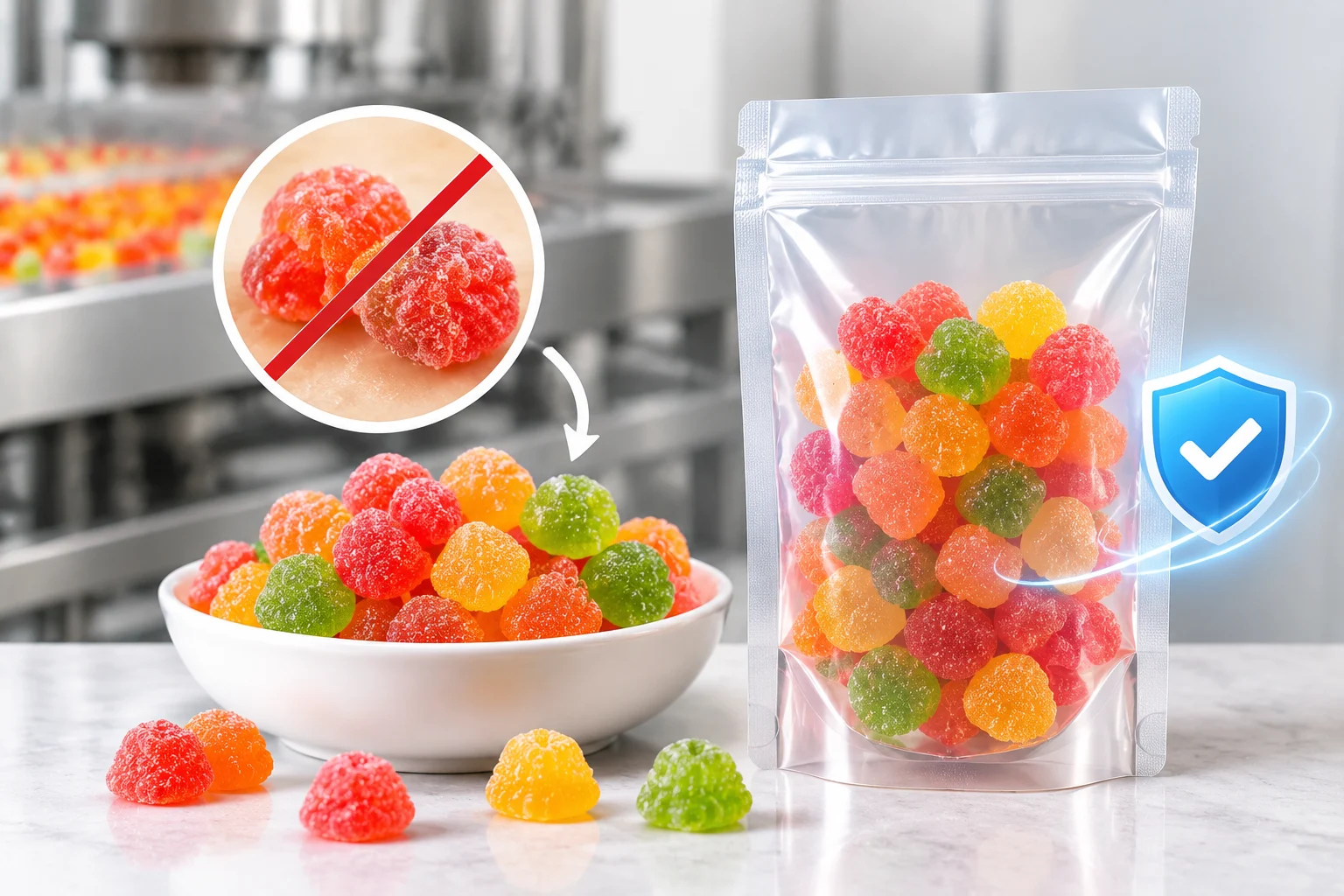
Gummy candies are popular for their soft texture, chewy consistency, and variety of flavors. However, gummies sticking together during manufacturing, storage, or transportation can create significant challenges for producers. When individual gummies bond together, they may lose their original shape, become difficult to separate, and affect the overall appearance and quality of the finished product.
This issue can lead to product waste, packaging difficulties, and customer dissatisfaction. Understanding the main causes of gummy adhesion and implementing the right production, storage, and packaging practices can help manufacturers maintain product quality and improve production efficiency.
1. Why Do Gummies Stick Together?
Before finding effective solutions, it is important to understand what causes gummies to become sticky. Several factors can contribute to this problem.
1.1 Excessive Sugar and Syrup Content
Sugar, glucose syrup, and other sweetening ingredients play an important role in gummy production. However, an imbalance in the formulation can leave excessive surface sugars on finished gummies.
When gummies cool and dry, these sugars may create a tacky outer layer. As individual pieces come into contact with each other, they can easily stick together.
Manufacturers should carefully control ingredient ratios and cooking conditions to achieve the desired texture and reduce excessive surface stickiness.
1.2 High Moisture Content and Water Activity
Moisture is another major factor affecting gummy texture and stability.
Gummies with excessive moisture or high water activity may develop a softer, wetter surface. This increases the likelihood of individual pieces sticking together, particularly during storage and transportation.
Manufacturers should monitor water activity during quality control and ensure that the drying process achieves the appropriate product specifications.
1.3 Temperature and Humidity Changes
Environmental conditions can significantly influence gummy quality.
High temperatures may soften gummy products, while excessive humidity can increase moisture absorption. When gummies are exposed to these conditions for extended periods, their surfaces may become increasingly sticky.
Temperature and humidity should therefore be monitored throughout production, storage, and distribution.
1.4 Improper Packaging and Sealing
Packaging plays an important role in maintaining gummy quality after production.
If packaging materials provide insufficient moisture protection or the seals are not properly formed, external humidity can enter the package. This may change the texture of the gummies and increase the possibility of sticking.
In addition, excessive compression during transportation or storage can cause gummies to press against one another, potentially affecting their shape and surface condition.
2. Effective Ways to Prevent Gummies from Sticking Together
Once the potential causes have been identified, manufacturers can take several practical steps to reduce gummy adhesion.
2.1 Optimize the Gummy Formulation
A well-balanced formulation is essential for producing gummies with consistent texture and surface characteristics.
Manufacturers should evaluate the proportions of sugar, glucose syrup, gelatin, pectin, and other ingredients. Adjustments may be necessary depending on the desired texture and production conditions.
For alternative gelling ingredients, it is also important to understand their temperature requirements and processing characteristics.
Consistent formulation control helps reduce variations between production batches.
2.2 Improve the Drying and Cooling Process
Proper drying and cooling allow gummies to develop a more stable texture before packaging.
If gummies are packaged while they are still warm or insufficiently dried, residual moisture and surface tackiness may increase the risk of sticking.
A controlled cooling environment helps bring products to a suitable temperature before they enter the packaging process.
Manufacturers should establish consistent drying and cooling procedures based on their specific gummy formulations.
2.3 Apply Anti-Sticking Coatings
Coatings can provide an additional layer of protection against surface adhesion.
Common options include:
- Sugar Coating: Creates a crystalline outer layer that can help reduce direct contact between gummy surfaces.
- Tapioca Starch: Helps absorb surface moisture and creates a drier exterior.
- Oil-Based Coating: Can reduce friction and prevent gummies from adhering to one another.
- Specialty Glazing Agents: Help improve surface appearance and provide a smoother finish.
The appropriate coating depends on the gummy formulation, product requirements, and applicable food regulations.
2.4 Maintain Controlled Storage Conditions
Gummies should be stored in a cool, dry environment with stable temperature and humidity levels.
Manufacturers should avoid exposing finished products to direct sunlight, excessive heat, or humid conditions.
For large-scale operations, environmental monitoring systems can help maintain consistent storage conditions and reduce the risk of product deterioration.
3. Choosing the Right Packaging to Prevent Gummies from Sticking
Even when production conditions are properly controlled, unsuitable packaging can affect gummy quality during storage and distribution.
Selecting packaging materials with appropriate moisture barriers and reliable sealing performance is essential.
3.1 Use High-Barrier Packaging Materials
Gummy candies can be sensitive to moisture and environmental changes. High-barrier packaging materials help limit moisture transmission and protect the product from external conditions.
Common flexible packaging structures include:
- PET/PE Laminated Films: Provide durability, flexibility, and reliable sealing performance.
- Aluminum Foil Laminates: Offer strong moisture, oxygen, and light barriers.
- Metallized Films: Provide additional barrier protection while maintaining flexible packaging characteristics.
- High-Barrier Composite Films: Can be customized according to product shelf-life and storage requirements.
The right material structure should be selected based on the product formulation, target shelf life, and distribution environment.
3.2 Choose Resealable Packaging Bags
Resealable packaging is particularly useful for gummy products that are consumed over multiple occasions.
Stand-up pouches with zipper closures allow consumers to open and reseal packages after use. This helps reduce repeated exposure to ambient air and humidity when the zipper is properly closed.
Other suitable options include:
- Stand-Up Pouches
- Flat Bottom Bags
- Three-Side Seal Pouches
- Quad Seal Bags
- Custom Zipper Pouches
Different pouch styles can accommodate various package sizes, product quantities, and retail display requirements.
3.3 Ensure Reliable Heat Sealing
A reliable heat seal helps prevent external moisture and contaminants from entering the package.
Manufacturers should consider several factors when evaluating packaging seal performance:
- Appropriate sealing temperature
- Suitable sealing pressure
- Consistent sealing time
- Compatible film structures
- Seal integrity testing
Poorly formed seals can compromise the protective performance of otherwise high-quality packaging materials.
4. How to Maintain Gummy Quality During Transportation
Transportation introduces additional challenges because packaged gummies may experience temperature fluctuations, humidity changes, and mechanical pressure.
To reduce these risks, manufacturers should consider the following practices:
Use Protective Outer Cartons
Corrugated cartons help protect flexible pouches from excessive pressure, punctures, and physical damage during distribution.
Avoid Excessive Stacking Pressure
Overloading cartons or stacking products improperly may compress gummy packages and affect the shape of individual pieces.
Control Transportation Conditions
Where necessary, temperature-controlled transportation can help minimize exposure to excessive heat.
Select Suitable Packaging Sizes
Packaging should provide sufficient space for the product without allowing excessive movement or unnecessary compression.
Combining appropriate packaging materials with proper transportation practices helps maintain product appearance and consistency throughout the supply chain.
5. Common Mistakes to Avoid When Packaging Gummies
Even experienced manufacturers can encounter problems when packaging gummy products. Avoiding the following mistakes can help improve packaging performance.
- Packaging Gummies Before They Are Fully Cooled: Residual heat may contribute to moisture condensation inside the package.
- Using Low-Barrier Packaging Materials: Insufficient moisture protection can affect gummy texture during storage.
- Ignoring Seal Quality: Small sealing defects may allow external moisture to enter.
- Choosing Inappropriate Packaging Sizes: Excessive compression can cause gummies to stick together or lose their shape.
- Neglecting Storage Conditions: High humidity and temperature fluctuations can reduce product stability.
A combination of proper manufacturing controls, suitable packaging structures, and consistent quality inspections is essential for maintaining gummy product quality.
6. Final Thoughts: Protect Gummy Quality with the Right Packaging Solution
Preventing gummies from sticking together requires attention to every stage of the production and supply chain. From ingredient formulation and moisture control to drying, coating, storage, and packaging, each step contributes to the final product quality.
For gummy manufacturers, selecting suitable flexible packaging is an important part of protecting products against external moisture and maintaining freshness during distribution. High-barrier laminated films, resealable zipper pouches, and reliable heat-sealing structures can all contribute to better packaging performance.
If you are looking for customized packaging solutions for gummy candies, confectionery, or other products, choosing the right pouch style and material structure can make a meaningful difference.
Contact our team to discuss your packaging requirements, explore customized pouch options, and find a suitable flexible packaging solution for your products.
Visit: https://fdxpack.com/contact/