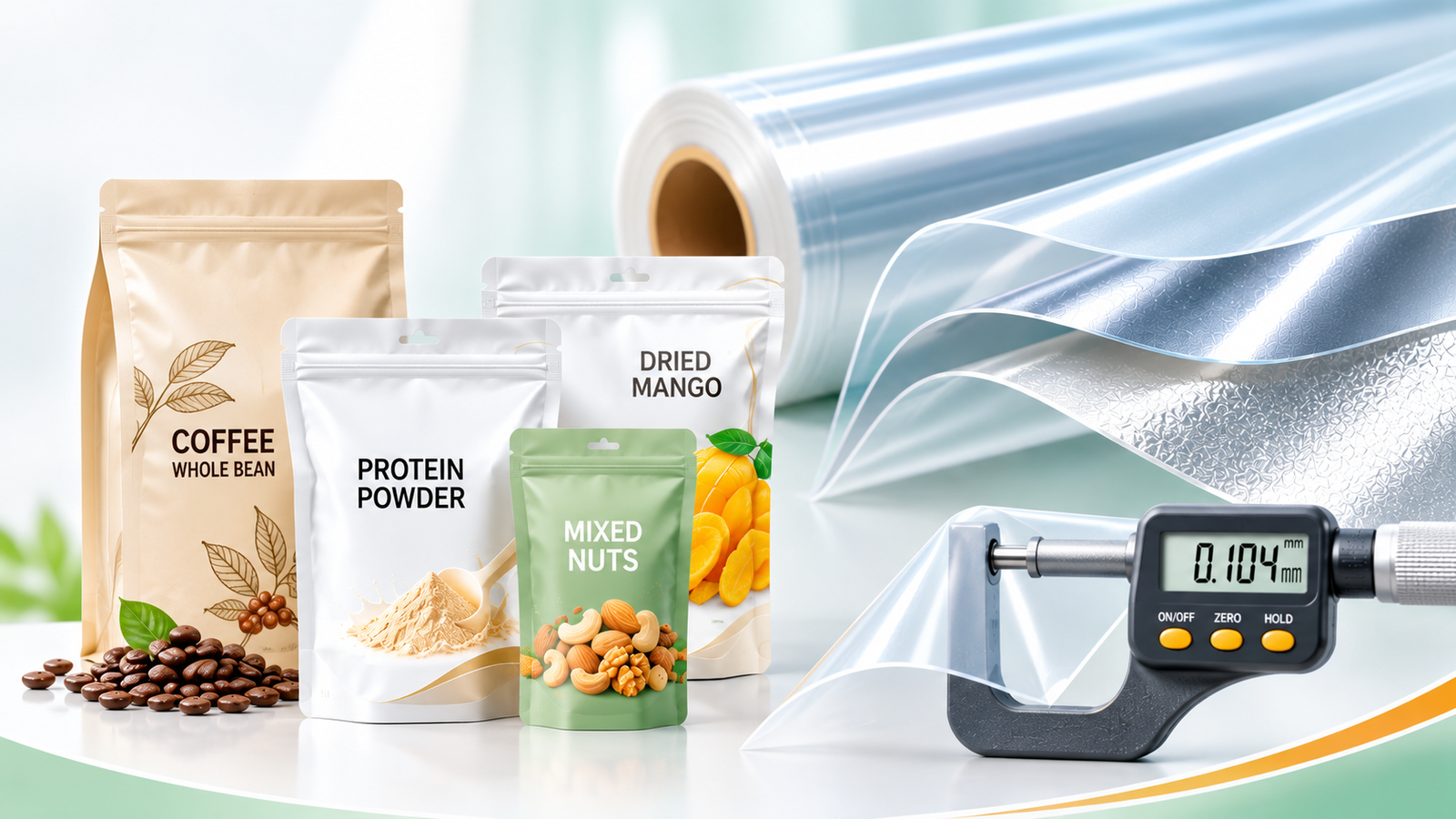
Choosing the right packaging film thickness is an important part of food packaging design. The film must provide sufficient strength, reliable sealing, and suitable protection without adding unnecessary material costs.
However, thicker packaging does not always mean better packaging. The right choice depends on the food product, packaging structure, filling process, storage conditions, and required shelf life.
This guide explains how food manufacturers and packaging buyers can select suitable film thicknesses for different applications.
1. Why Does Packaging Film Thickness Matter?
Packaging film thickness is usually measured in micrometers (μm) or microns.
For reference:
- 1 micron = 0.001 mm
- 50 microns = 0.05 mm
- 100 microns = 0.10 mm
Film thickness can influence several important packaging properties.
Mechanical Strength
Thicker films may offer greater resistance to punctures, tearing, and handling damage, depending on the material and film formulation.
Heat-Sealing Performance
The thickness and composition of the sealing layer can affect seal strength, sealing temperature requirements, and performance during filling.
Packaging Flexibility
Thinner structures may offer better flexibility, while thicker films can provide a more substantial feel.
Material Cost
Increasing thickness generally increases material consumption per square meter, although total packaging cost also depends on material selection, processing, and production efficiency.
The objective is to find the most suitable balance between protection, functionality, and cost.
2. Common Packaging Film Thicknesses
Different flexible packaging materials have different thickness requirements.
The following table provides illustrative starting ranges for common packaging films.
| Packaging Material | Illustrative Thickness | Common Applications |
|---|---|---|
| PET Film | 12–25 μm | Printing and outer layers of laminated packaging |
| BOPP Film | 18–30 μm | Snack packaging and printed films |
| PE Film | 30–120 μm | Sealing layers, bags, and selected roll film applications |
| CPP Film | 25–80 μm | Heat-sealing layers and selected food packaging |
| PET/PE Laminate | 60–150 μm total | General food pouches and flexible packaging |
| PET/VMPET/PE | 70–160 μm total | Selected moisture- and oxygen-sensitive products |
| PET/AL/PE | 80–180 μm total | Applications requiring high-barrier structures |
Note: These ranges are illustrative, not mandatory industry specifications. Actual thickness depends on the film grade, packaging design, product, equipment, and performance requirements. Laminated thicknesses are approximate and may include adhesive contributions.
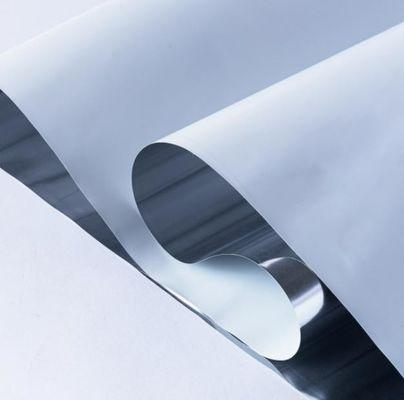
For example, a PET12/PE80 structure has a nominal film-layer thickness of approximately 92 μm before accounting for adhesive.
A PET12/VMPET12/PE80 structure has approximately 104 μm of nominal film layers, before adhesive contributions.
These examples demonstrate how individual layers contribute to the total packaging thickness.
3. How Product Weight and Packaging Size Affect Thickness
The weight and dimensions of the packaged food can influence the required mechanical performance.
Small Single-Serve Packaging
Small sachets for powders, seasonings, or snacks may use relatively thin films when the filling conditions and product characteristics permit.
The film must still provide adequate sealing and protection.
Medium-Sized Food Pouches
Stand-up pouches for nuts, dried fruits, candies, and powders may require additional stiffness, puncture resistance, or seal strength.
The selected thickness depends on the product's weight, shape, and packaging format.
Large-Capacity Packaging
Larger food packages may experience higher loads during transportation and handling.
They may require stronger sealing layers, reinforced structures, or greater film thickness.
However, thickness should not be selected based on filling weight alone.
Sharp products, drop resistance, pouch geometry, and distribution conditions can be equally important.
4. Film Thickness vs. Barrier Performance
One common misunderstanding is that thicker packaging always provides better oxygen and moisture protection.
In reality, barrier performance depends heavily on material selection and laminate structure.
Two important measurements are:
- OTR (Oxygen Transmission Rate): Indicates the amount of oxygen passing through a packaging material under specified testing conditions.
- WVTR (Water Vapor Transmission Rate): Indicates the amount of water vapor passing through a material under specified conditions.
For example:
PET/PE
A common laminate offering printability and heat-sealing performance. Its oxygen and moisture barrier properties depend on the specific layers and grades.
PET/VMPET/PE
A metallized structure that can provide enhanced barrier performance against oxygen, moisture, and light when appropriately designed and processed.
PET/AL/PE
An aluminum-foil laminate that can provide very high barrier performance for demanding applications, provided the foil and finished package remain intact.
Increasing PE thickness may improve certain mechanical or moisture-barrier properties, but it cannot automatically provide the same oxygen barrier as a properly designed aluminum-foil laminate.
For moisture-sensitive or oxygen-sensitive products, packaging buyers should evaluate the actual OTR and WVTR requirements rather than relying only on total thickness.
Explore our High Barrier Packaging solutions for applications requiring enhanced product protection.
5. Choosing Thickness for Different Food Applications
Different food products require different packaging characteristics.
| Food Application | Main Packaging Considerations | Typical Material Options |
|---|---|---|
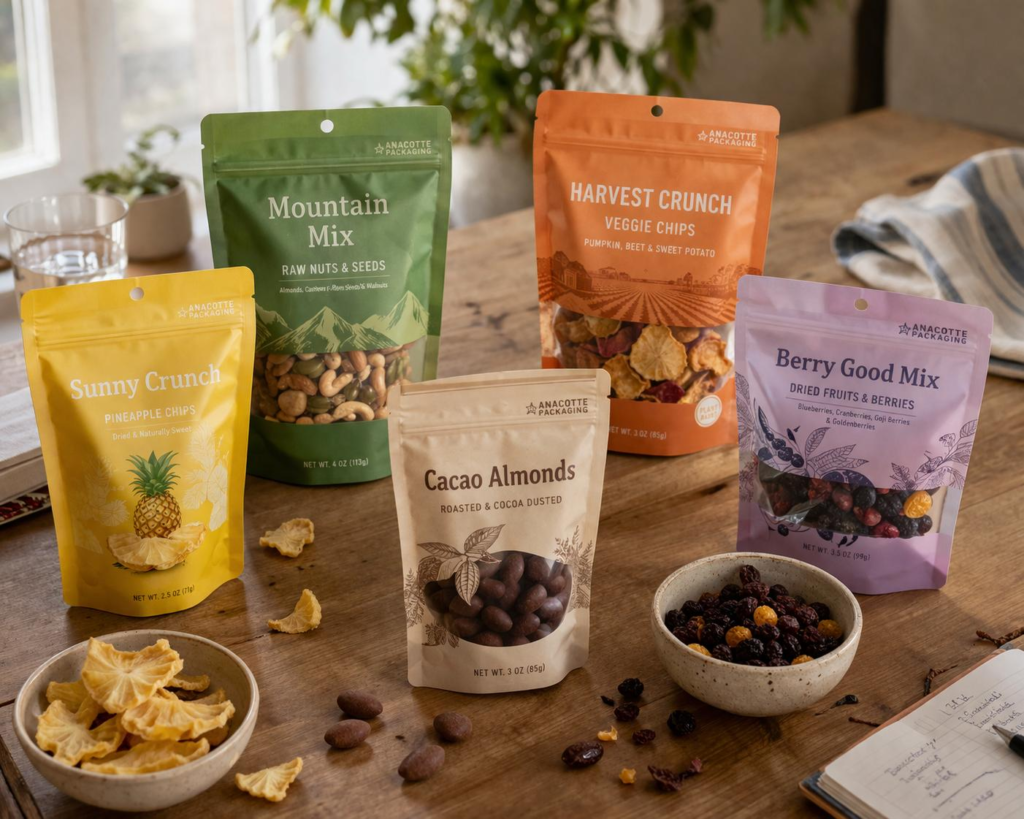
| Dried Fruits and Nuts | Moisture control, sealing, puncture resistance | PET/PE, PET/VMPET/PE |
| Powder Products | Seal integrity, moisture protection, powder contamination of seals | PET/PE, PET/VMPET/PE, PET/AL/PE |
| Coffee Products | Oxygen protection, aroma retention, valve compatibility | PET/VMPET/PE, PET/AL/PE |
| Frozen Foods | Low-temperature toughness, puncture resistance, sealing | Suitable PE-based or PA/PE structures |
| Candy and Snacks | Moisture management, handling strength, appearance | BOPP/CPP, PET/PE, selected barrier laminates |
| Liquid Products | Leak resistance, seal strength, drop resistance | Suitable multilayer PE-based laminates |
The table identifies common starting points, not universally suitable specifications.
For example, frozen food packaging should be evaluated for performance at its intended storage temperature. A material suitable for ambient conditions may not provide the same toughness when frozen.
Likewise, liquid packaging requires careful attention to seal design and transportation conditions, not simply greater film thickness.
For automated filling operations, buyers should also confirm compatibility with their packaging machines.
Our Food Packaging Roll Film page explains flexible film options for automatic packaging applications.
6. How to Reduce Packaging Costs Without Compromising Quality
Selecting the correct thickness can help reduce unnecessary packaging expenses.
However, reducing thickness without proper evaluation may increase the risk of packaging failure.
Consider the following approaches.
Optimize the Sealing Layer
Review whether the existing PE or CPP sealing layer provides more thickness than the application requires.
Select the Appropriate Material Structure
A carefully selected barrier structure may provide the required protection more efficiently than simply increasing the thickness of a lower-barrier material.
Review Packaging Dimensions
Oversized packaging increases film consumption and may create unnecessary empty space.
Consider Production Efficiency
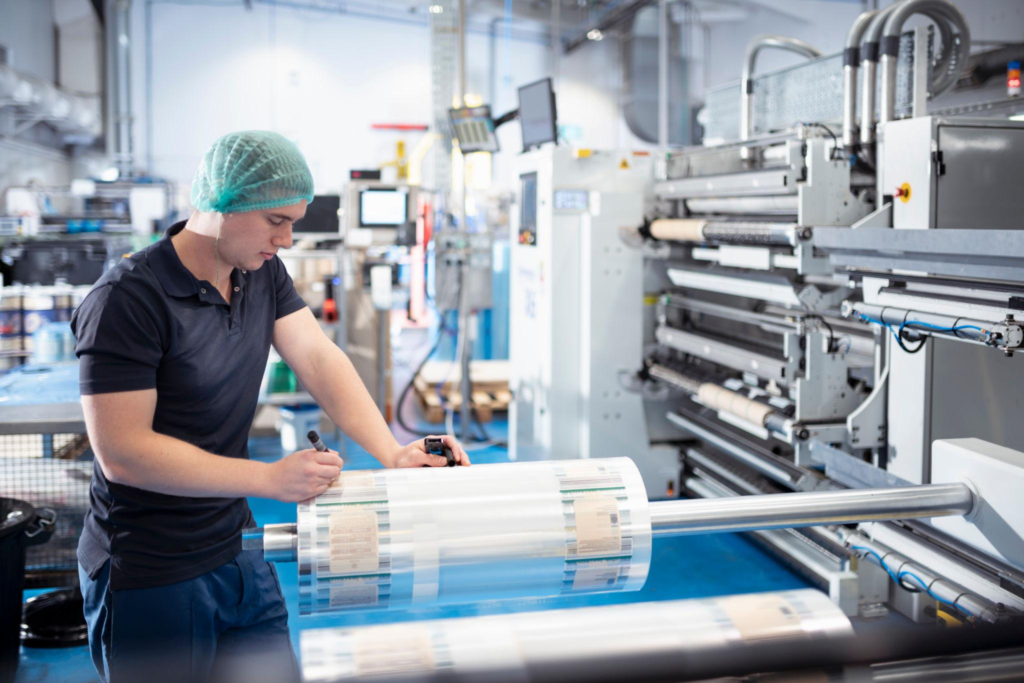
Film stiffness, friction properties, sealing performance, and roll-film consistency can influence packaging machine efficiency.
Conduct Packaging Trials
Before reducing thickness in commercial production, test the revised packaging under realistic filling, sealing, storage, and distribution conditions.
The lowest material cost does not necessarily produce the lowest total packaging cost.
Packaging failures, product damage, and production interruptions can outweigh the savings from thinner films.
7. Packaging Thickness and EU PPWR Considerations
For packaging intended for the European Union, material selection should also consider the Packaging and Packaging Waste Regulation (EU) 2025/40, commonly known as PPWR.
The regulation introduces requirements affecting packaging design, minimization, recyclability, and other areas, with different provisions applying on different dates.
When reviewing packaging thickness, manufacturers should consider:
Packaging Minimization
Avoid unnecessary material weight and volume while maintaining the packaging's required functions.
Material Compatibility
Evaluate how the complete packaging structure, including layers, coatings, adhesives, inks, and closures, affects its recyclability.
Performance Requirements
Packaging minimization should not compromise necessary product protection, hygiene, safety, or functionality.
Documentation
Maintain suitable technical evidence supporting packaging design decisions and applicable compliance requirements.
Importantly, a mono-material PE or PP structure does not automatically establish PPWR compliance.
The complete packaging design and applicable regulatory requirements must be evaluated.
For EU-bound products, packaging buyers should confirm the relevant requirements and implementation dates before finalizing specifications.
8. Frequently Asked Questions
Is thicker food packaging always stronger?
Not necessarily. Thickness can influence strength, but film formulation, orientation, laminate structure, and manufacturing quality also affect performance.
What is the best thickness for a stand-up pouch?
There is no single best thickness. The correct specification depends on product weight, pouch dimensions, barrier requirements, and intended handling conditions.
Can thinner packaging film reduce costs?
Yes, reducing film thickness may reduce material consumption. However, any change should be validated for sealing, mechanical performance, and product protection.
Does thicker PE provide better oxygen protection?
Increasing PE thickness can reduce oxygen transmission to some extent, but PE is generally not considered a high oxygen-barrier material. Higher barrier requirements may call for a different structure.
Should film thickness be tested before mass production?
For new or significantly modified packaging structures, production trials and relevant performance testing are recommended before large-scale manufacturing.
9. Conclusion
Choosing the right food packaging film thickness requires more than comparing micron values.
A suitable packaging specification should balance mechanical strength, sealing performance, barrier requirements, production compatibility, material consumption, and cost.
By evaluating the complete packaging structure and conducting appropriate trials, food manufacturers can select packaging that protects their products without unnecessary material usage.
Contact Us
Need custom food packaging bags or roll film with suitable material structures and thickness specifications?
FDXPACK provides custom flexible packaging solutions, including material selection, printing, pouch structures, and roll film for food packaging applications.
Website: FDXPACK
Email: emma@fdxpack.com
Contact: Request a Packaging Quote