Mono-PE vs Mono-PP Packaging: PPWR Guide
PPWR guide Food packaging

Mono-PE vs Mono-PP Food Packaging: Which Is Better Under PPWR?

There is no universal winner. The right choice depends on your product, processing conditions and the recycling pathway available in your target market.
A practical guide for packaging buyers and product teams
Compare the materials
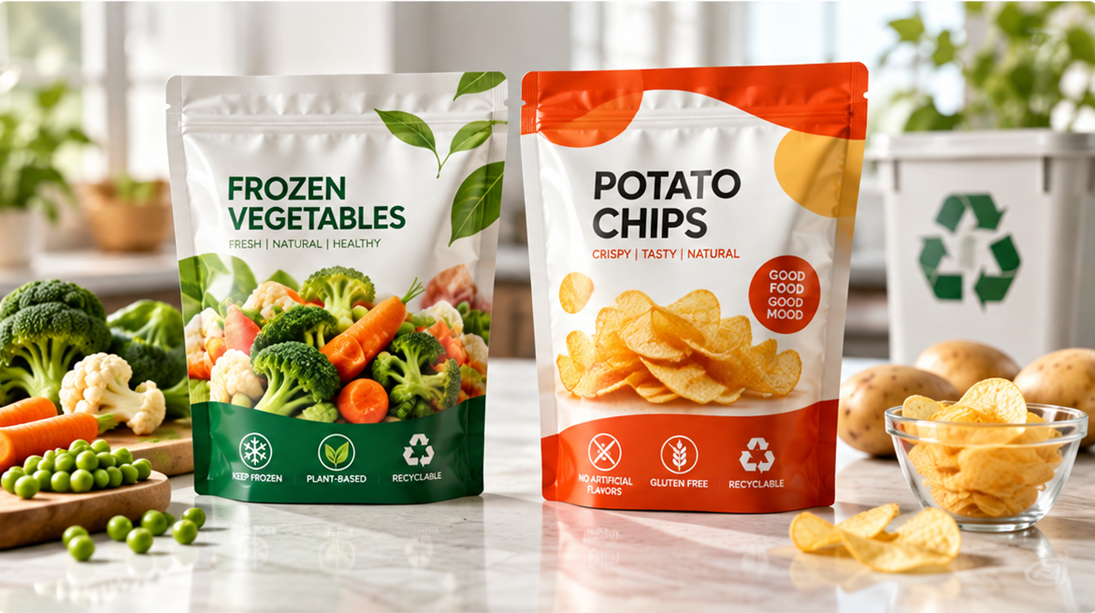
Mono-PE vs Mono-PP food packaging comparison featuring recyclable frozen vegetable and potato chip stand-up pouches for sustainable food packaging under EU PPWR.
Material selection starts with food protection, not just the polymer label.

Mono-PE vs Mono-PP: Key Differences

Both mono-PE and mono-PP can support recyclable flexible packaging designs, but their performance depends on film structure, processing conditions and product requirements.

Comparison of mono-PE and mono-PP flexible packaging across seven material selection factors.
Comparison Mono-PE Mono-PP
Flexibility Generally more flexible Often stiffer
Heat Resistance Depends on PE grade and structure Certain PP structures offer higher heat resistance
Heat Sealing Good sealing flexibility Depends on sealant grade
Oxygen Barrier Requires structure-specific evaluation Requires structure-specific evaluation
Moisture Barrier Depends on film design Depends on film design
Recyclability PE recycling stream compatibility PP recycling stream compatibility
Applications Frozen foods, snacks, powders Snacks, dry foods, selected higher-temperature applications

Swipe horizontally to compare both materials.

What Does the EU PPWR Mean for Mono-Material Food Packaging?

The EU Packaging and Packaging Waste Regulation (PPWR) introduces requirements affecting packaging design, recyclability and material selection. Food brands should assess their packaging structures against applicable requirements and implementation timelines.

2025

PPWR Entered into Force

— Regulation (EU) 2025/40 entered into force.

2026

General Application Begins

— PPWR generally begins to apply, with exceptions and phased obligations.

2030+

Recyclability Requirements and Further Milestones

Recyclability-related requirements phase in according to the regulation and applicable implementing measures.

Barrier Performance, Heat Resistance & Sealing: What Really Matters?

Choose packaging based on measurable performance—not material names alone. Match the complete structure to your product, production process and shelf-life requirements.

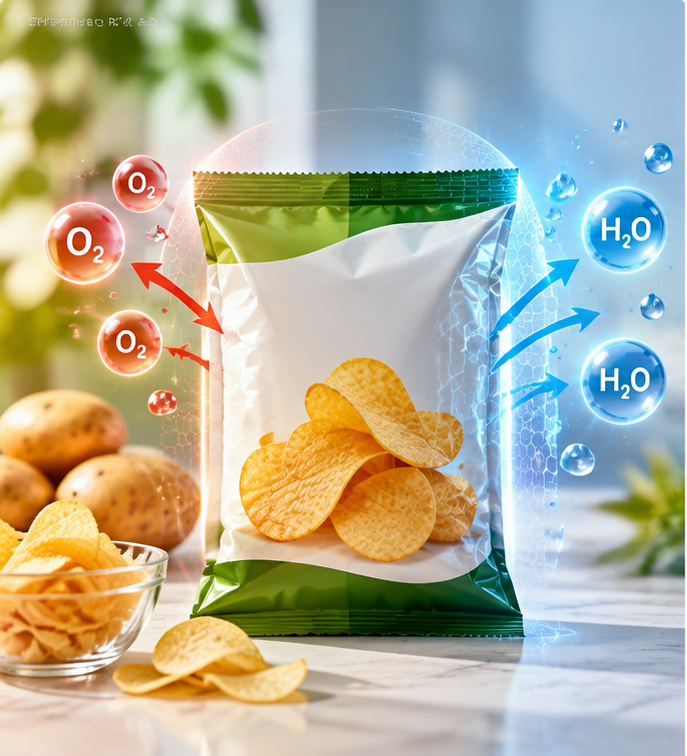
High barrier flexible food packaging pouch illustrating oxygen and moisture protection to maintain product freshness and extend shelf life.
01

Protection & shelf life

Oxygen & Moisture Barrier

Compare oxygen transmission rate (OTR), water vapor transmission rate (WVTR), product sensitivity and required shelf life. Neither material alone guarantees high barrier performance.

OTR WVTR Product sensitivity Shelf life

Compare test results under the same temperature and humidity conditions to make meaningful decisions.

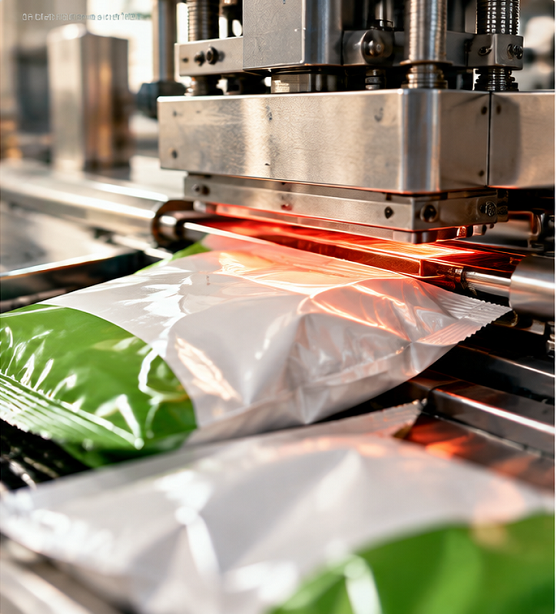
Industrial heat sealing machine sealing flexible food packaging pouches, demonstrating seal strength, temperature control, and packaging efficiency.
02

Seal integrity & line efficiency

Heat Sealing Performance

Evaluate sealing temperature range, seal strength, packaging speed and contamination tolerance for the selected structure.

Temperature range Seal strength Packaging speed Contamination tolerance

Validate the sealing window on the intended equipment, including realistic dwell time, pressure and product contamination.

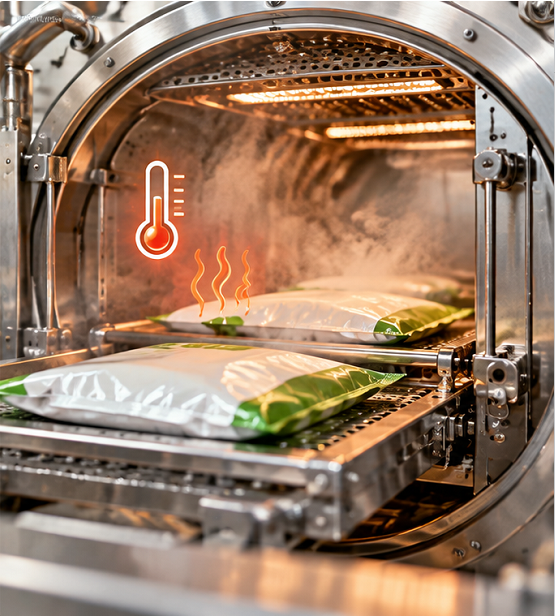
Flexible food packaging pouches undergoing thermal processing in industrial equipment, demonstrating heat resistance, thermal stability, and seal integrity.
03

Thermal stability & processing

Heat Resistance & Processing

Consider filling temperature, pasteurization, sterilization and storage conditions. Mono-PP should not automatically be described as retort-ready.

Filling temperature Pasteurization Sterilization Storage conditions

Confirm dimensional stability, barrier retention and seal integrity after the intended thermal cycle.

Which Material Fits Your Food Product?

Explore common food packaging applications and follow a practical selection process to evaluate the right Mono-PE or Mono-PP structure for your product.

Cold-Chain Performance

Frozen Food Packaging

Prioritize low-temperature flexibility, puncture resistance and reliable sealing. Mono-PE can be evaluated under actual frozen storage conditions.
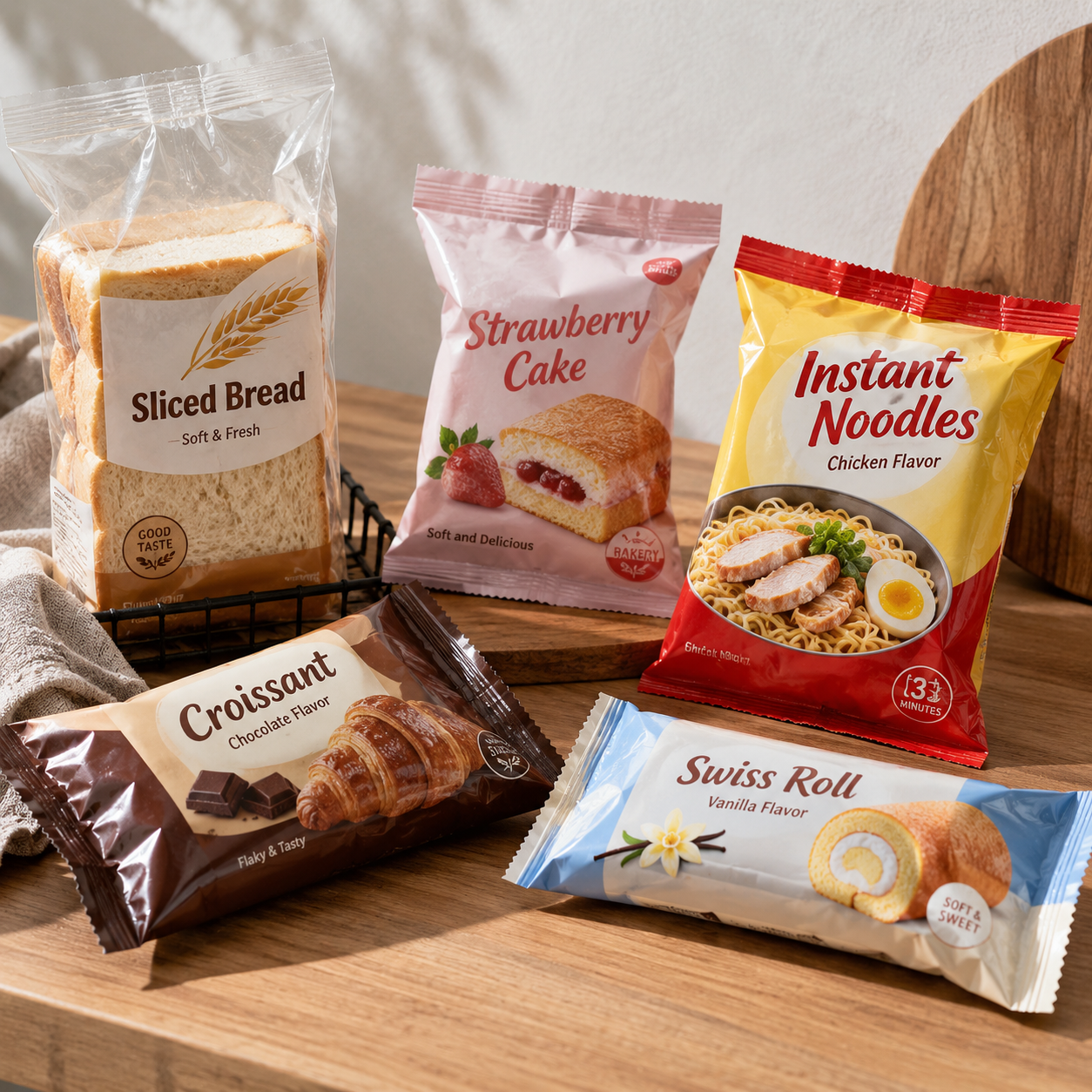
Center seal pouches for bread, cakes, instant noodles, and bakery product packaging
Barrier & Freshness

Snack Packaging

Compare oxygen and moisture protection, target shelf life and print quality. Both Mono-PE and Mono-PP structures may be considered.
Whey protein powder stand up pouch, custom printed resealable supplement packaging bag
Moisture Protection

Powder Packaging

Focus on moisture resistance, seal integrity and resealable closures. Evaluate the complete structure against your powder and filling requirements.
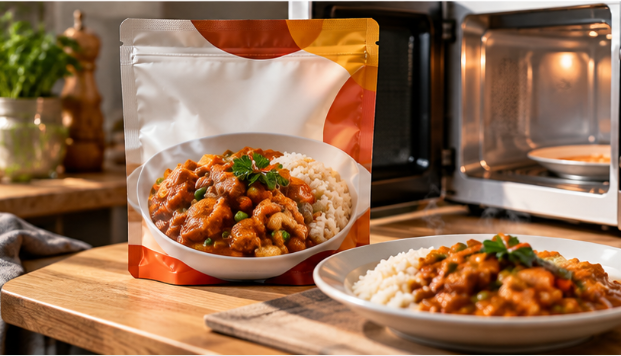
Custom printed stand-up pouch for ready-to-eat chicken curry rice, displayed beside a microwave and prepared meal, highlighting convenient food packaging for heat-and-serve applications.
Thermal Processing

Ready-to-Eat Meals

Validate filling temperature, sterilization conditions and heat resistance of the final pouch. Material selection requires structure-specific testing.

How to Choose the Right Packaging Structure

Follow these five steps before selecting a mono-material food packaging solution.

01

Product

Identify food type and shelf-life requirements.
02

Barrier

Evaluate oxygen, moisture and light protection.
03

Processing

Confirm filling, sealing and heat conditions.
04

Recyclability

Assess complete structure and recycling compatibility.
05

Testing

Validate food-contact suitability and pack performance.

Evaluate the complete packaging structure before making a final material decision. Mono-material design alone does not establish PPWR compliance.

Need Help Choosing Between Mono-PE and Mono-PP?

Share your food product, target shelf life and processing conditions. Our team can help evaluate suitable custom flexible packaging structures.
Request a Material Consultation →

Frequently Asked Questions About Mono-PE and Mono-PP Packaging

Understand the practical considerations behind material selection, recyclability, barrier performance and food packaging applications.

Is mono-PE packaging compliant with PPWR?

Mono-PE packaging is not automatically compliant with the EU Packaging and Packaging Waste Regulation (PPWR). Compliance depends on the finished packaging, applicable requirements and implementation timelines, not simply its main polymer. The assessment may include recyclability, packaging minimization, substances of concern, labeling and recycled-content obligations where applicable. Inks, adhesives, coatings, barriers and closures can affect the result. Ask your supplier for structure details and supporting documentation, and evaluate the complete pack against the requirements relevant to your application and market.

Is mono-PP more recyclable than mono-PE?

Mono-PP is not universally more recyclable than mono-PE. Recyclability depends on the complete packaging structure and the collection, sorting and recycling systems available in the intended market. A predominantly single-polymer pouch may still contain inks, adhesives, barrier layers or accessories that influence its recycling compatibility. Some regions have more established pathways for PE films than PP films, while others differ. Compare both options using market-specific design-for-recycling guidance and evidence for the finished pack rather than assuming one polymer is always better.

Which material offers better oxygen and moisture barrier?

Neither the mono-PE nor mono-PP label alone tells you the final oxygen or moisture barrier performance. Film thickness, orientation, coatings, barrier layers and processing all influence protection. Compare oxygen transmission rate (OTR) and water vapor transmission rate (WVTR) results for the proposed structures under stated temperature and humidity conditions. Also consider seal integrity and performance after filling, transport or heat treatment. The right choice should meet your product's shelf-life requirements through appropriate testing, rather than relying on a general polymer comparison.

Can mono-PP packaging be used for retort food?

Some mono-PP structures may be suitable for retort food, but suitability must be demonstrated for the complete packaging and process. PP's heat resistance does not automatically qualify every PP-based pouch for sterilization. Validation should address the retort temperature, holding time, pressure profile, food composition, seal strength, dimensional stability and barrier retention after processing. Food-contact compliance and shelf-life performance also need assessment. Work with your packaging supplier and process specialists to validate the proposed structure under your actual production conditions before commercial use.

Can mono-material packaging replace traditional multilayer food pouches?

Mono-material packaging can replace some traditional multilayer food pouches, but it is not a universal drop-in alternative. Feasibility depends on the food's sensitivity to oxygen, moisture and light, the required shelf life, and the filling or sterilization process. The replacement must also deliver reliable seals, mechanical protection and compatibility with your packaging equipment. Review the complete specification, then run barrier, machinability, distribution and shelf-life trials. A suitable structure balances product protection and operational performance with recycling compatibility in the target market.